
Snazzy Snaps & Travel Tales
Welcome to my travel blog! I've visited 30 countries (kickstarted by Remote Year) and 38 U.S. States. Click SUBSCRIBE to receive an email when a new post is published.
Borneo's Wicked Wildlife - Pt 3
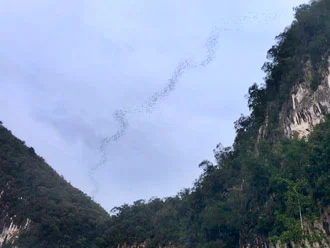
Want to know what millions of bats flying out of a cave looks like? Check out part 3, the finale of Borneo's Wicked Wildlife, featuring the bats in Gunung Mulu National Park!

Years ago, I watched BBC’s Planet Earth series and was transfixed by the Caves episode. Bats, snakes and insects make up this incredible ecosystem. Borneo’s Mulu National Park boasts some of the world’s most impressive caves and underground passages and is featured in the BBC episode I saw. Mysterious Mulu was beckoning me…
In Kuala Lumpur, we visited the Batu Caves, which was basically Mulu’s baby brother. It was but a mere appetizer before the Mulu main course.
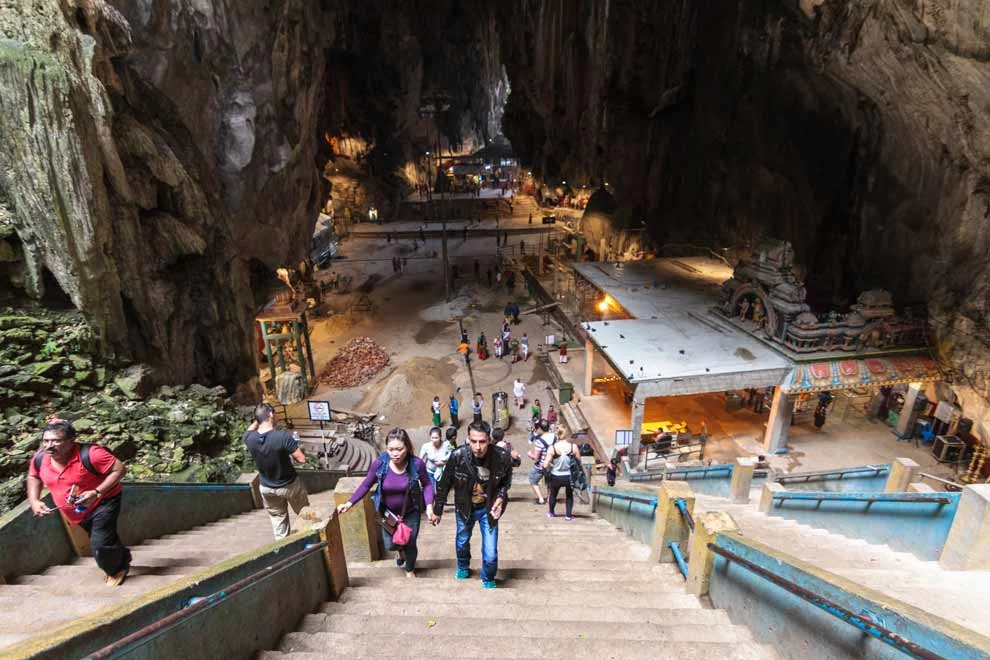
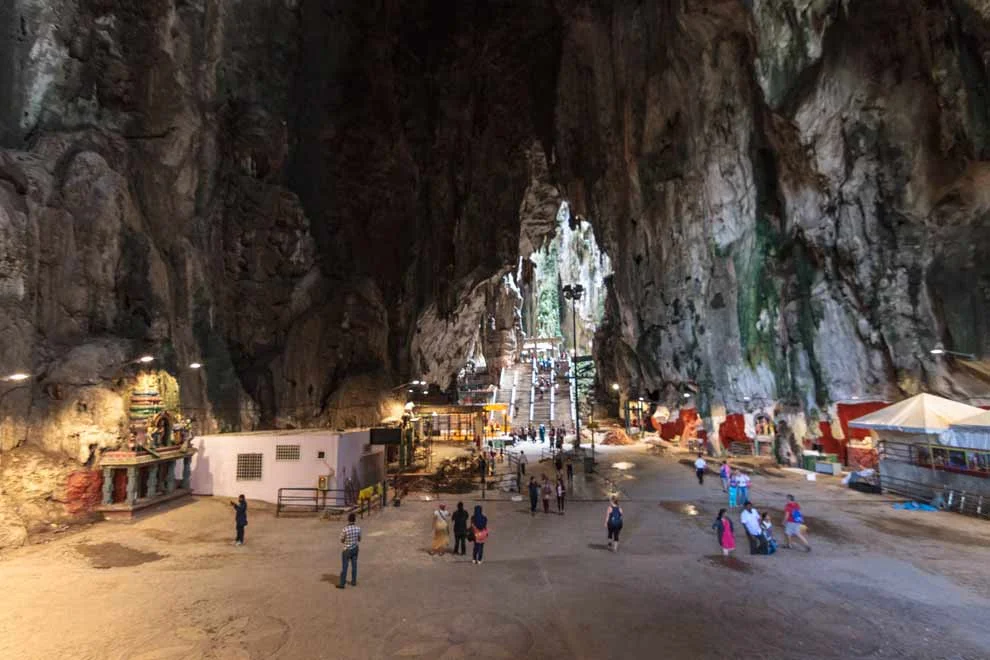
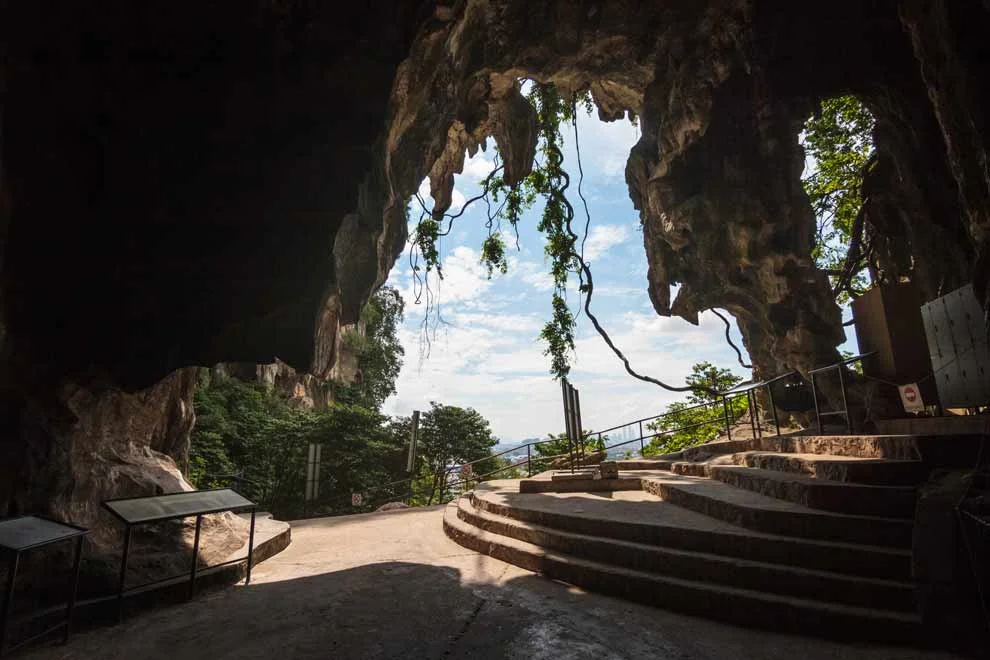
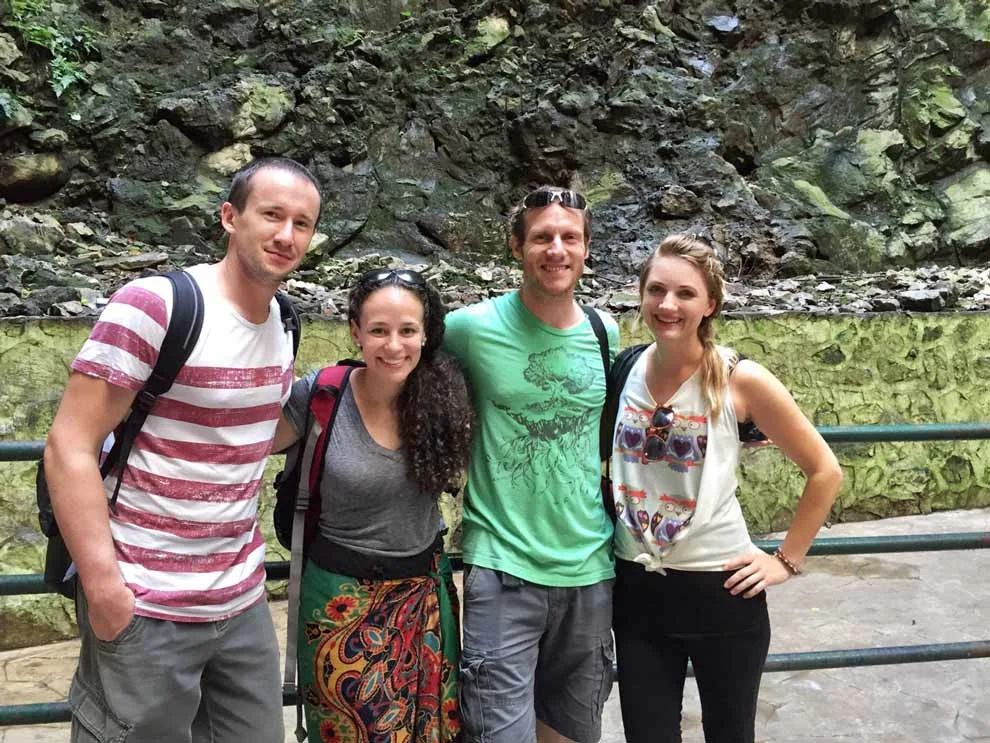
We took a headlamp guided tour of the dark caves.
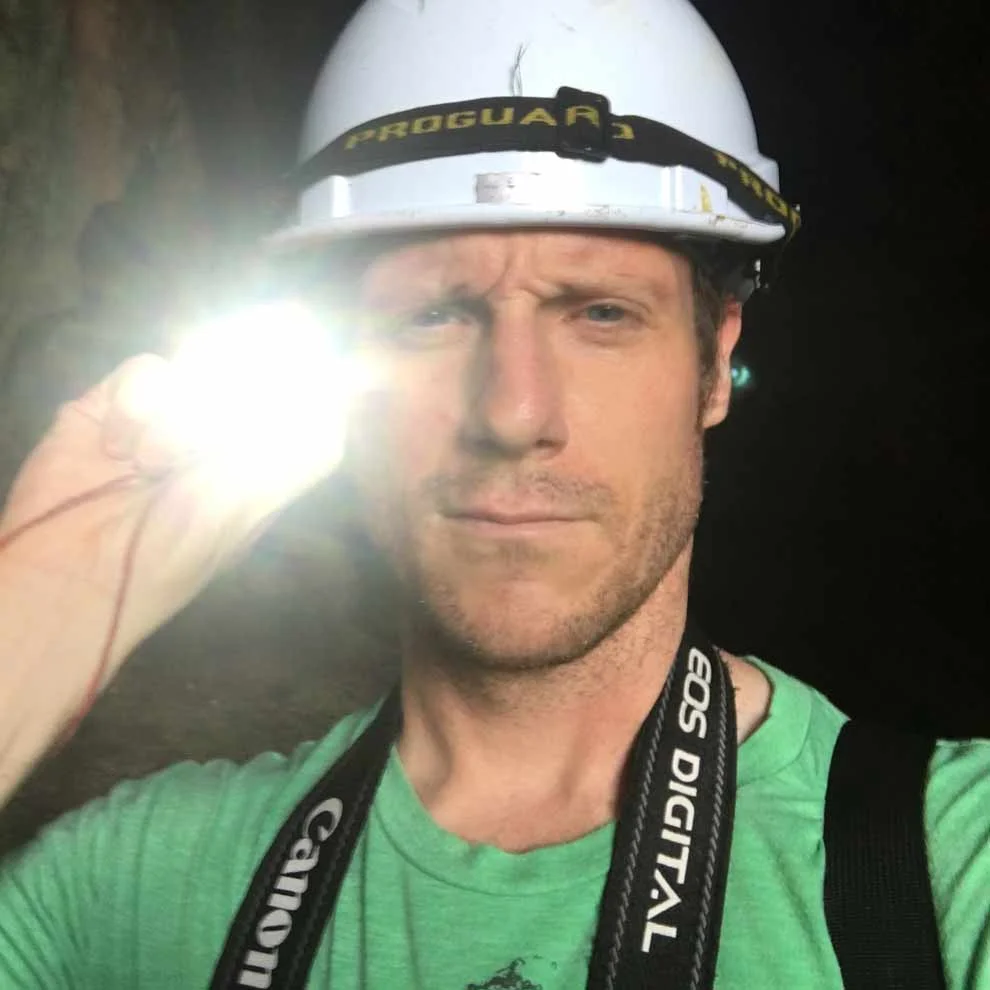
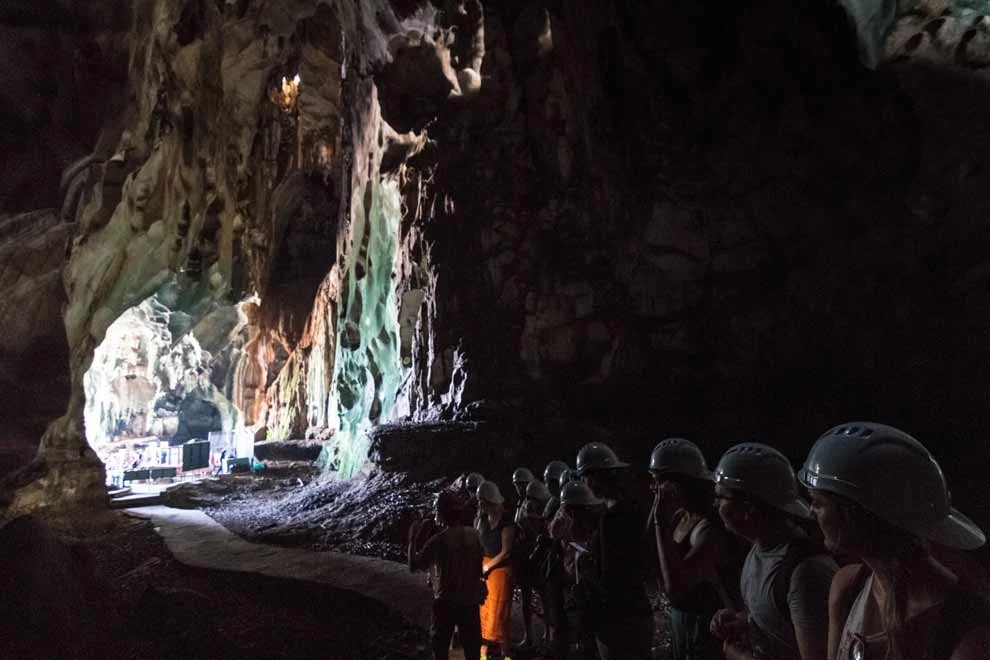
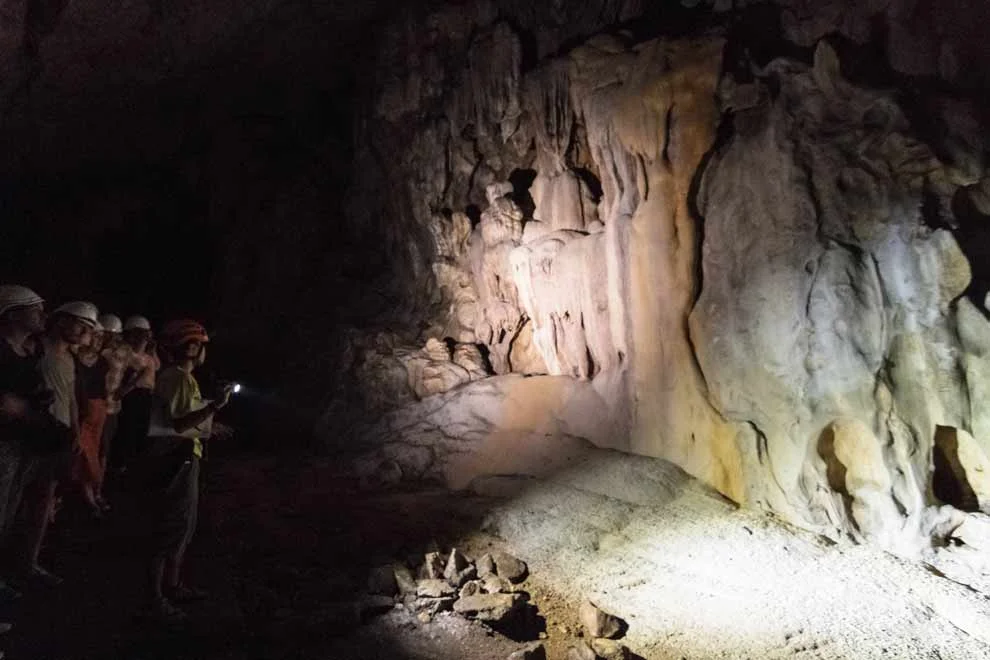
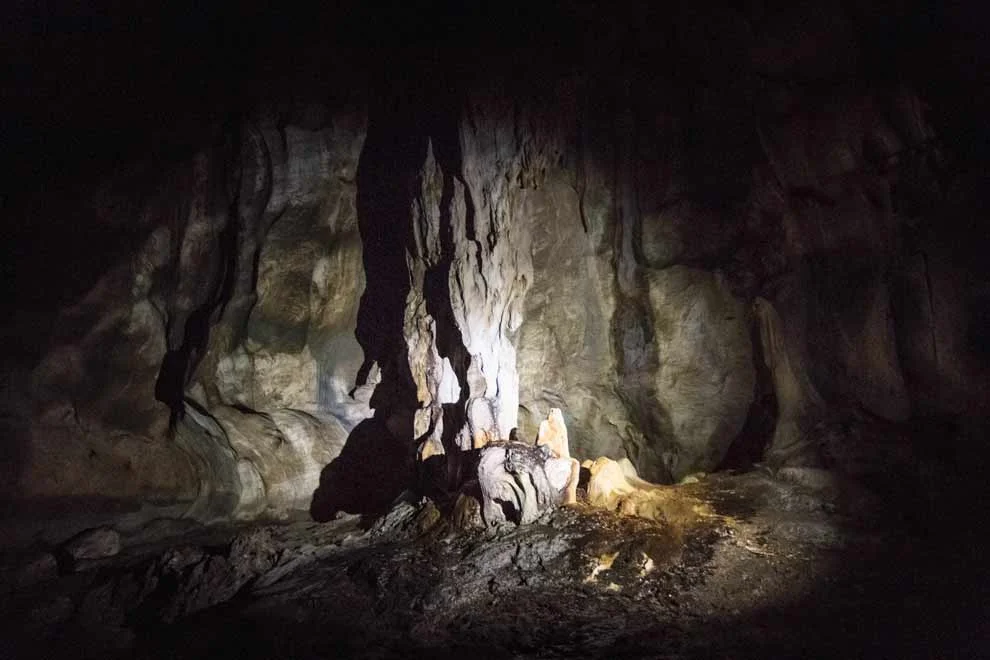
You see centipedes, and spiders and scorpions, and worms, and cockroaches, and all sorts of creepy crawlers.
And the whole time, you hear the chirping of bats above you.
But, the thing is, it’s not scary. It sounds scary, but, it’s actually quite peaceful.
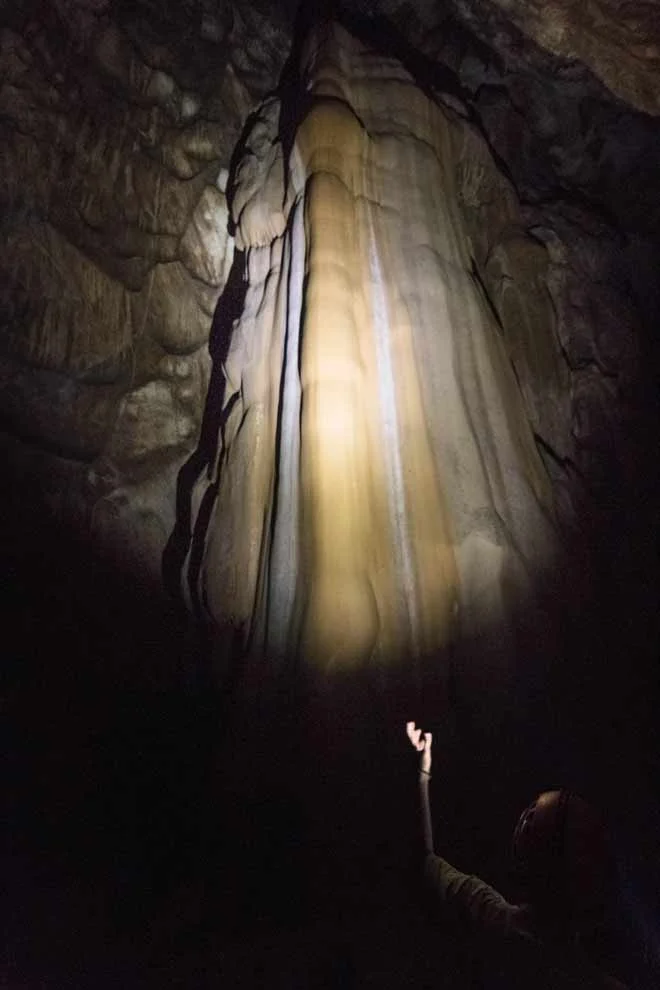
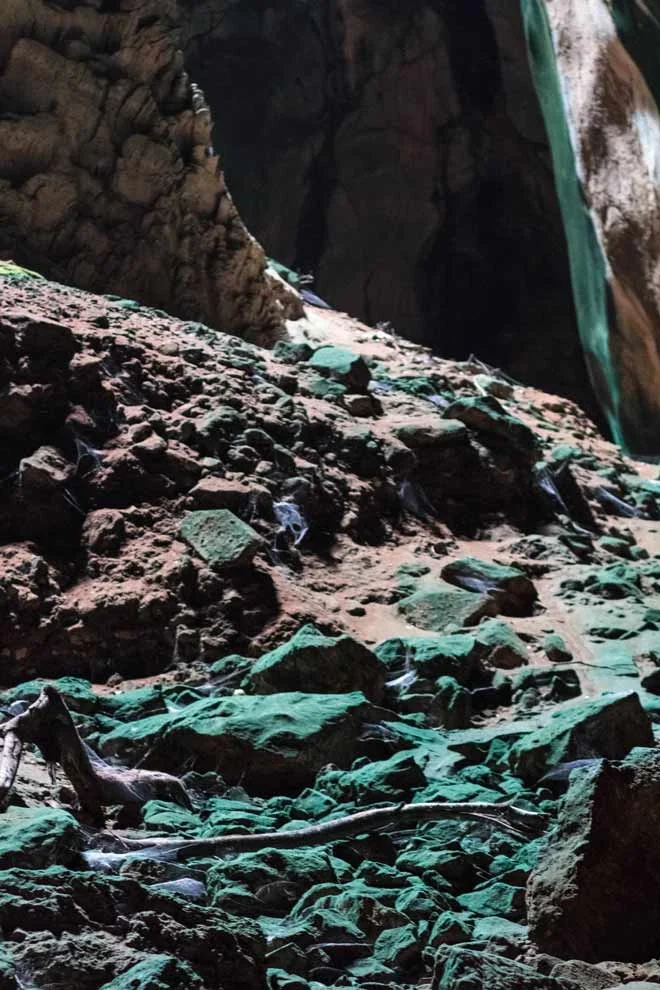
Algae grows on the rocks that get sunlight inside the caves
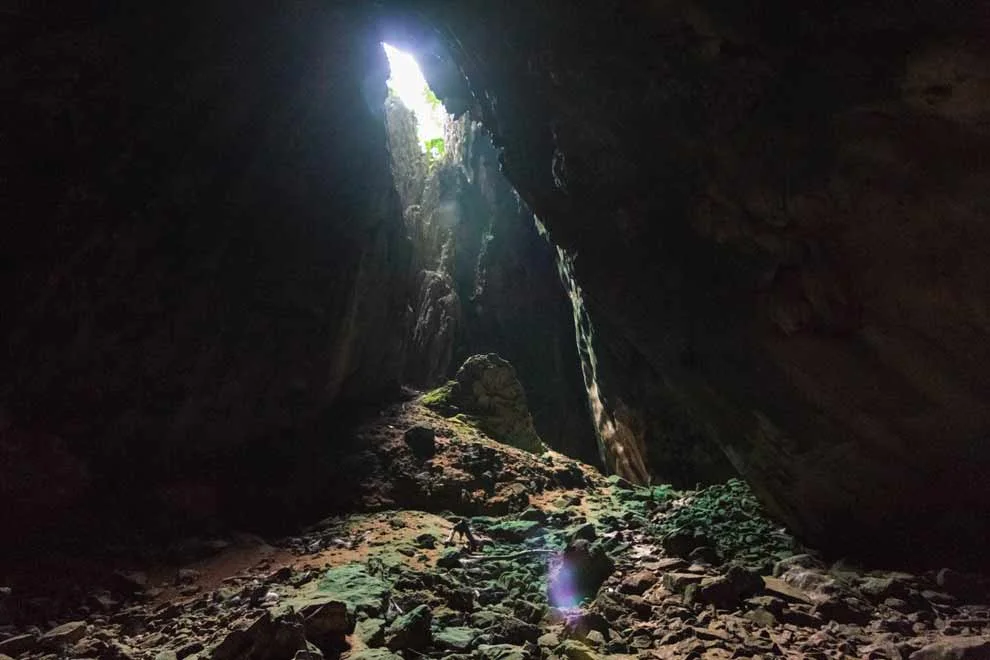
The highlight of the tour (for me): deep in the dark trenches, they ask everyone to turn their headlamps off. We sat in the dark for a couple minutes, just listening to the chirping, the scurrying, the slithering, the whoosh of the wind and drips of water.
Nothing living in the caves has any interest in getting near humans. You have to trust that.
Deep in the dark caves, there really is NO light. You try to adjust your eyes, and still it’s complete pitch black. In normal nighttime environments, there exists some moonlight, and or ambient light. Not in the caves. Pitch black. It was INTENSE.
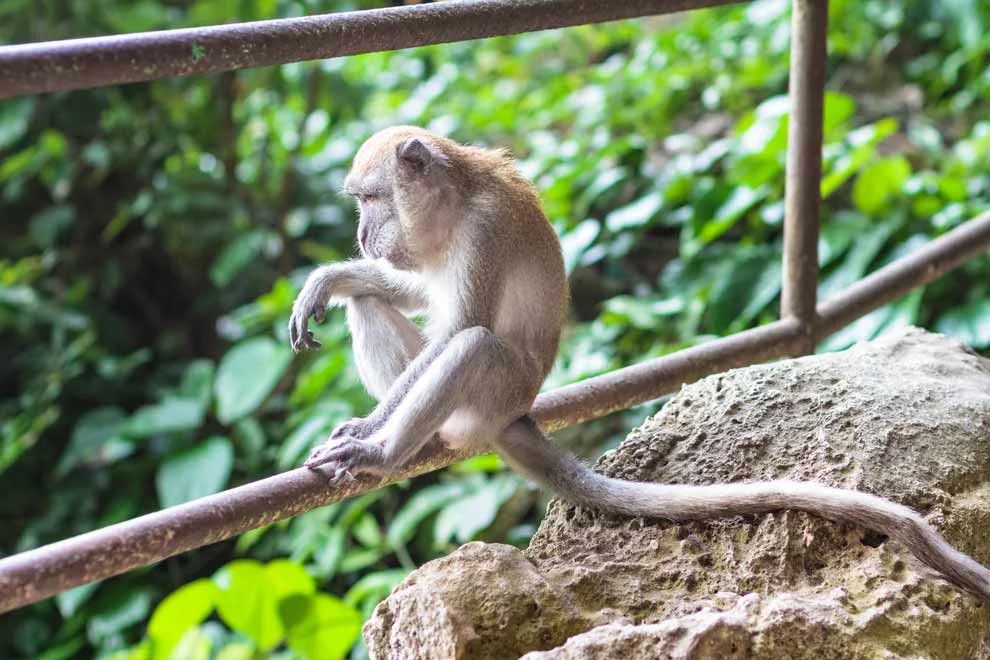
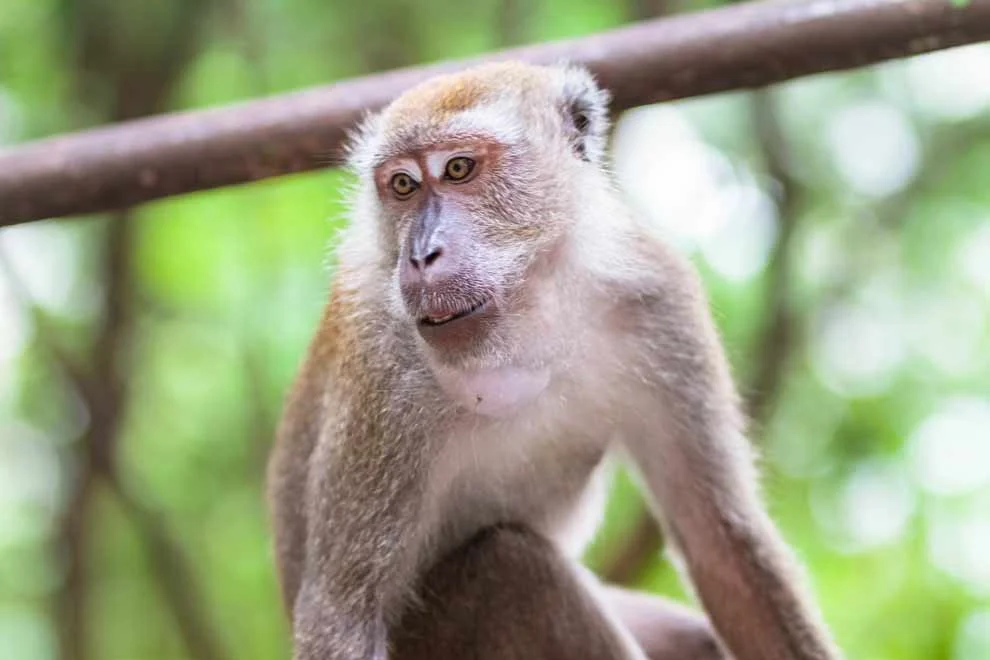
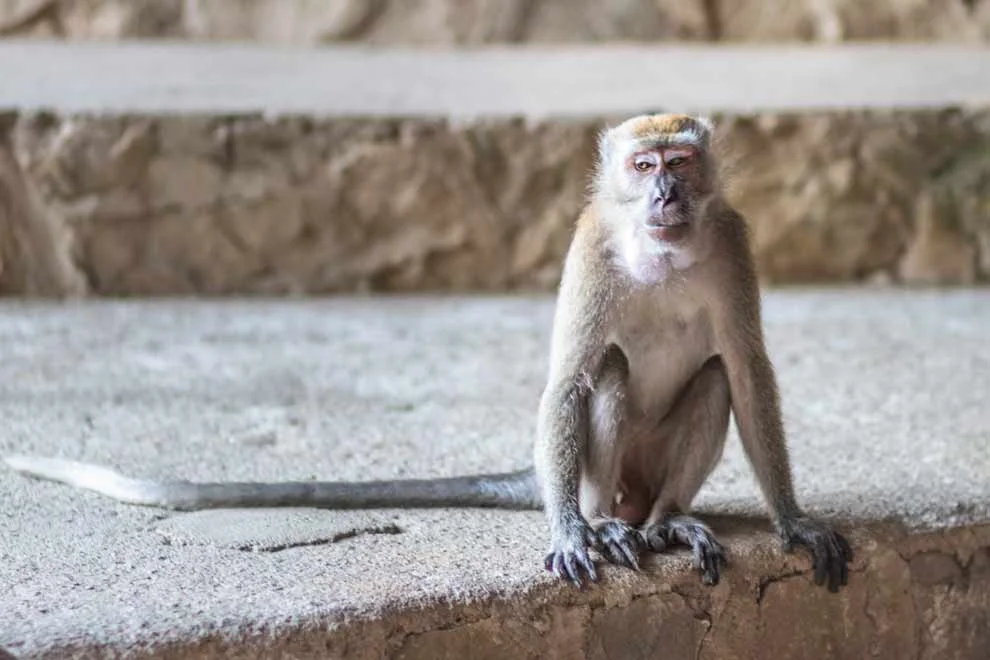
Once you get out of the cave you are confronted by tons of devious monkeys that seem like they are plotting or concocting some 12 Monkeys type plan...
But, that was just the Batu Caves! Back to Borneo...
Gunung Mulu National Park is a UNESCO World Heritage Site, protected because of its unique wildlife and plant life and protected so people of future generations can visit and experience the beauty.
Mulu was next level cave madness. WICKED. WEIRD. And, MAGNIFICENT.
First, my hotel, the Mulu Marriott. It's nestled right into the rainforest. Just listen to the awesome SOUND of the jungle. I love that sound. Constant buzz, chirping, yawping geckos and frogs. So weird.
The Mulu Marriot’s mascot is the gecko (kinda). They sell gecko stuffed animals in their hotel store. Each guest gets a gecko in their room (joke). Here's mine:
Now, unfortunately, there was monsoon-season rain every day, and I did not get to go on the canopy walk, or the night hike, where I would have seen tons of crazy lizards, centipedes, etc. But the real attraction was the bats in the caves.
There are 4 main “Show Caves” that most tourists visit.
Deer Cave (named because Deer used to run through the passage and lick the salt covered rocks)
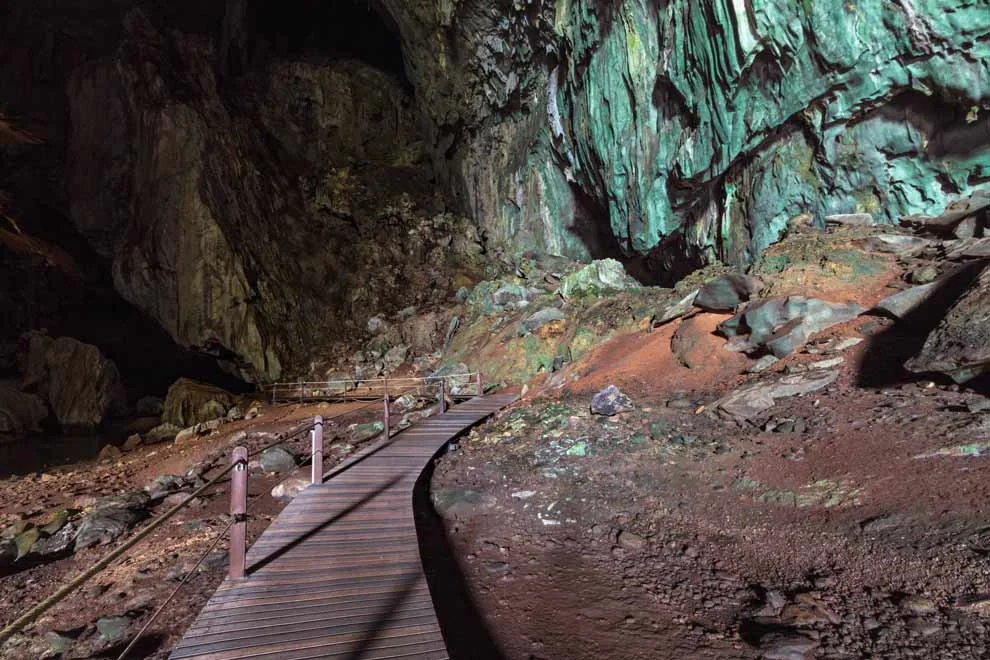
Lang Cave (Gorgeous interior walls that look like jellyfish)
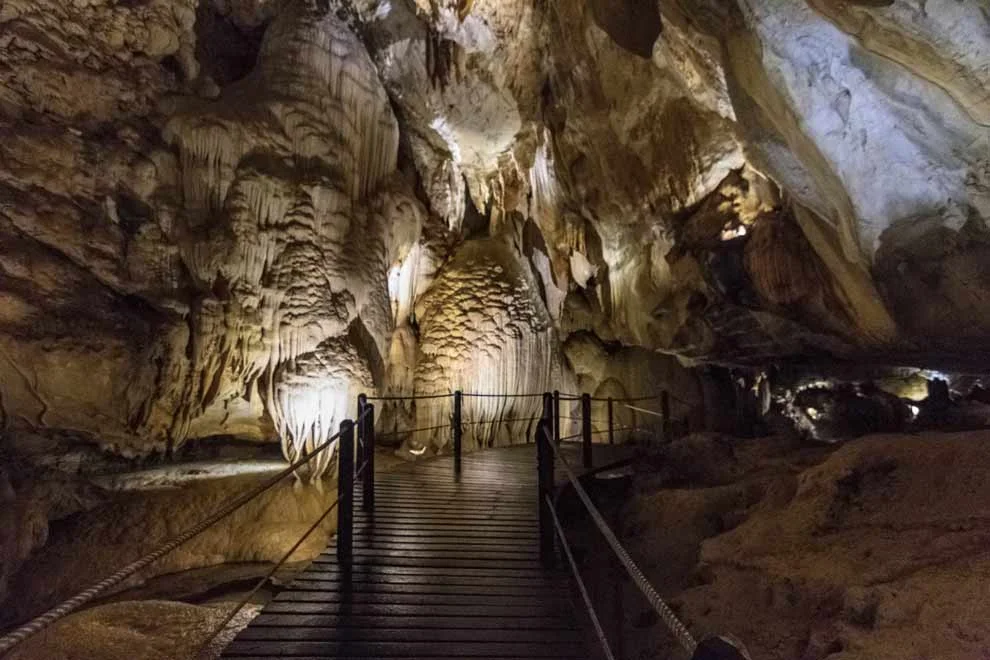
Clearwater Cave (because of the gorgeous river running through it)
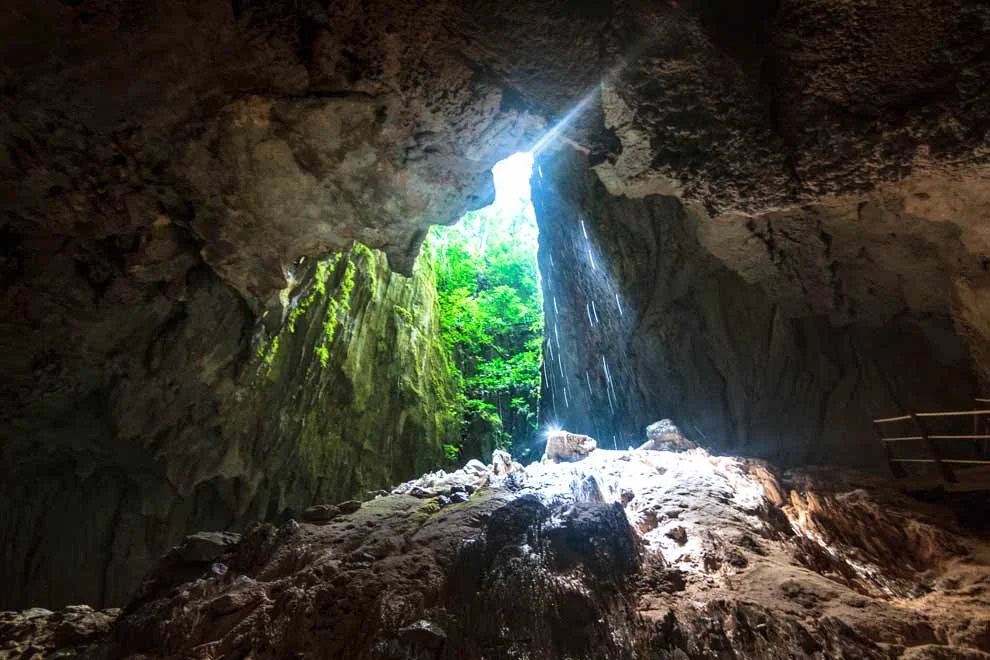
Cave of the Winds (named because of the wind vortex that exists in some of the narrow passages. Tons of cool stalagmites and stalactites!)
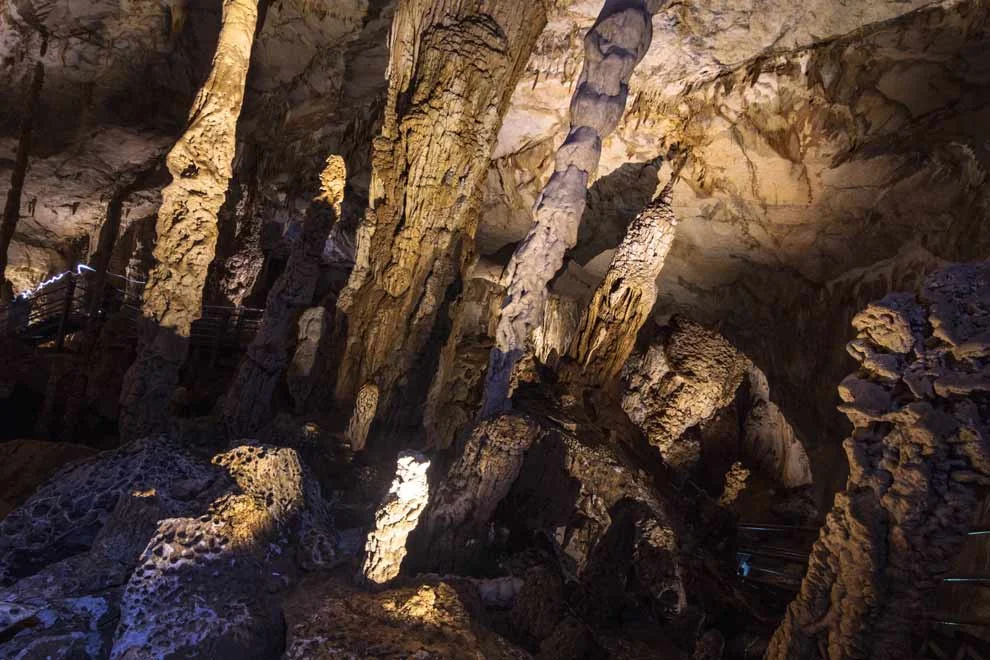
The caves are home to MILLIONS of bats. Bats are a vital part of these ecosystems---pretty much everything revolves around them. They eat mosquitoes and other insects. They poop out “guano” and other insects eat the guano, and other insects eat those insects and the circle of life continues.
I am thankful for the bats, because there’s enough mosquitoes in the rainforest already! I’ve got the bites to prove it.
In addition to the bats, there are Cave Swiftlets: birds that use a type of 'clicking' sonar. The chirping of millions of bats and then the clicking of the low flying swiftlets. INCREDIBLE.
The clicking gets more frequent the closer they get to their target. Click, click, click, click, click, click...like a horror movie.
Spooky-key-kuh key, key-ku-key, key-kuh-key.
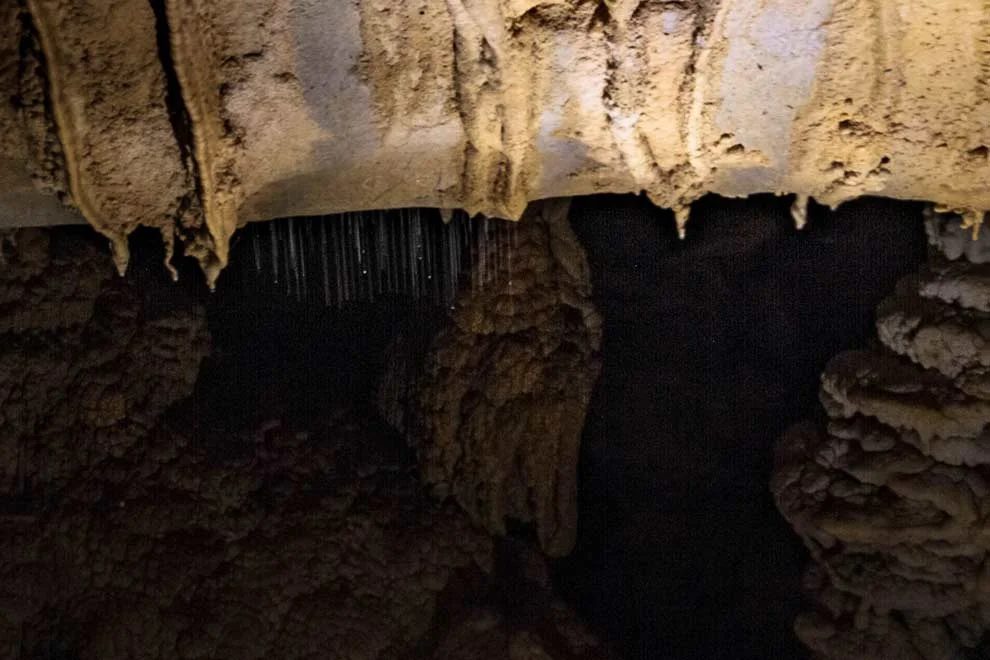
There are also millions of spiders in the caves. They post up on the walls, and catch flies and other insects. Check out how many webs there are:
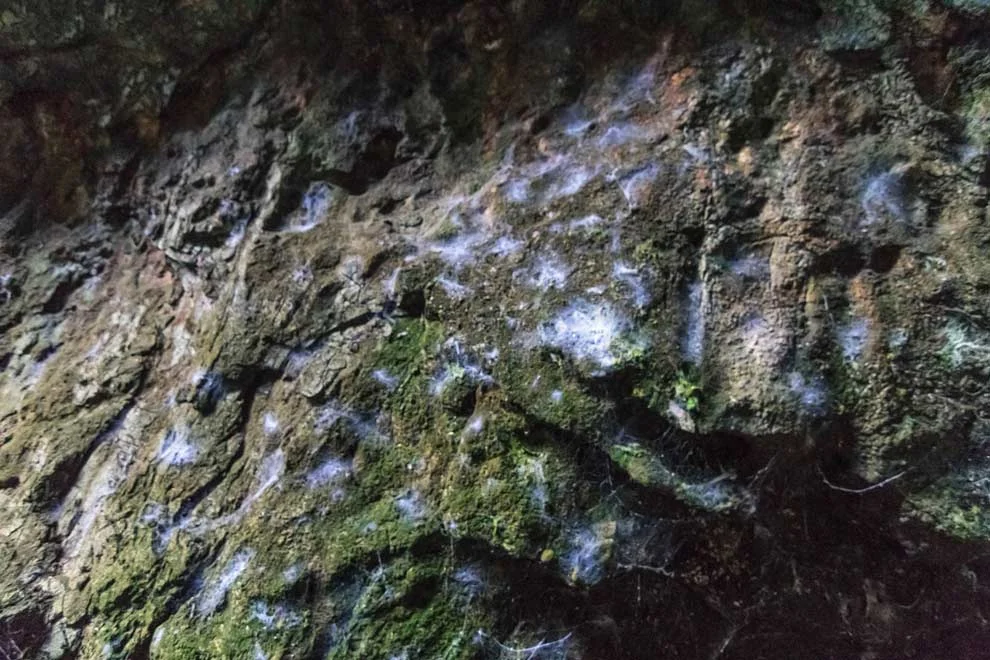
This is a different type of web, spun by the thread worm. It hangs and traps flying insects:
Day one of the tour ends at the Bat Observatory, outside the Deer / Lang Caves with the possibility of seeing the bats fly out of the caves in formation to feed.
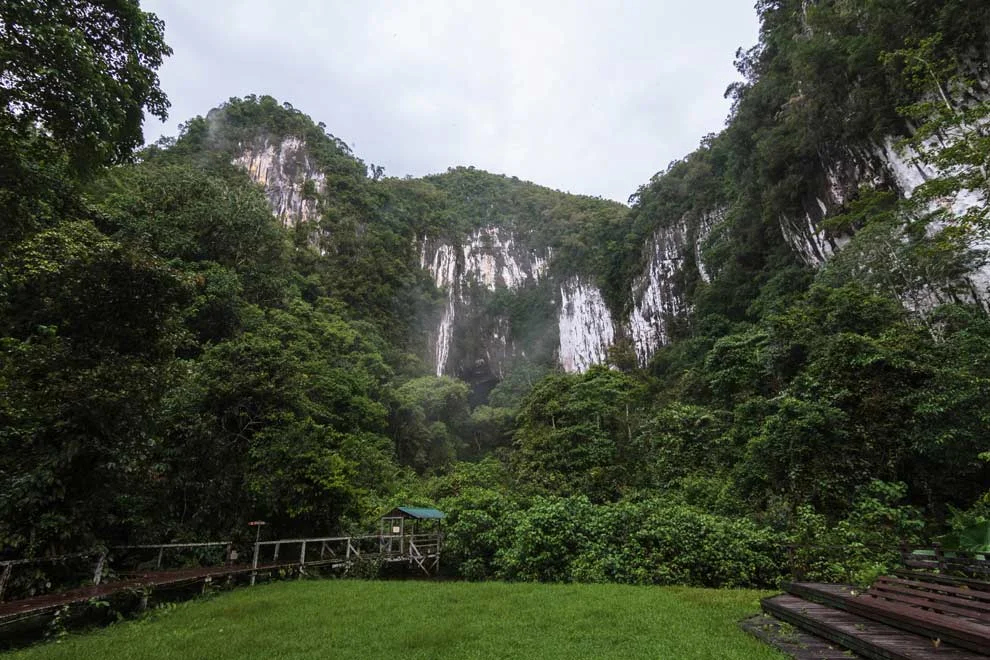
Some lucky visitors get to see em. Some don’t. Some folks I met tried two nights in a row, and the monsoons were too strong --- no bats.
But, wouldn’t you know it, I’m like the Lucky Charms leprechaun and even though it was raining, they came out to play.
They come out in waves. About 5-7 mini groups exit the cave first. They flock in beautiful ribbon-esque formations. After the mini groups, the rest of 'em fly out in one long ribbony stream that can last ~45 mins! (Ours lasted about 5 minutes. Most likely not all came out due to the drizzle of rain) It's almost like a fireworks show with the grand finale.
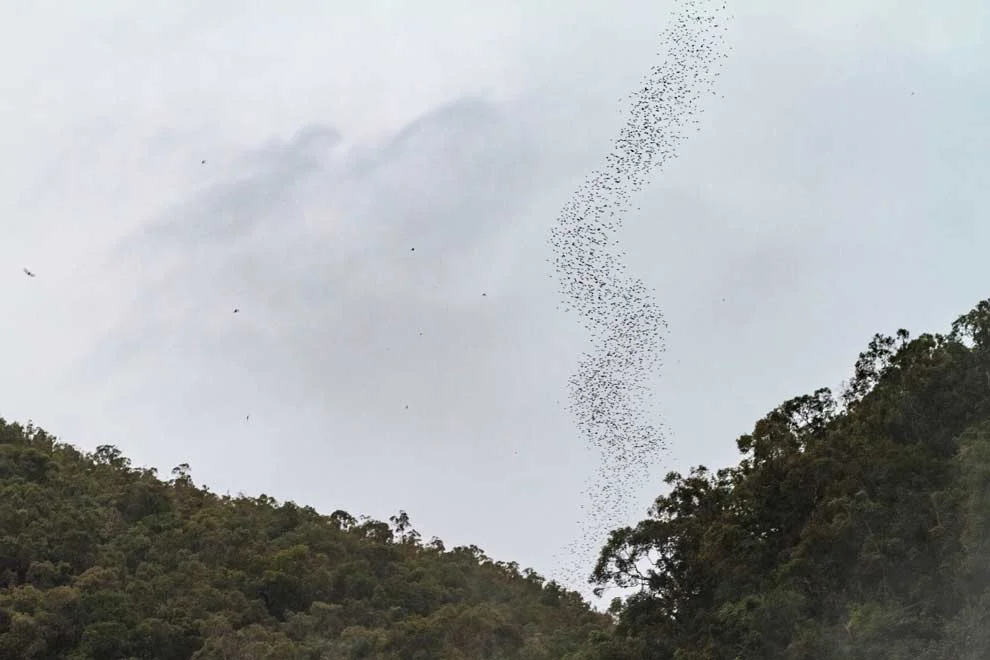
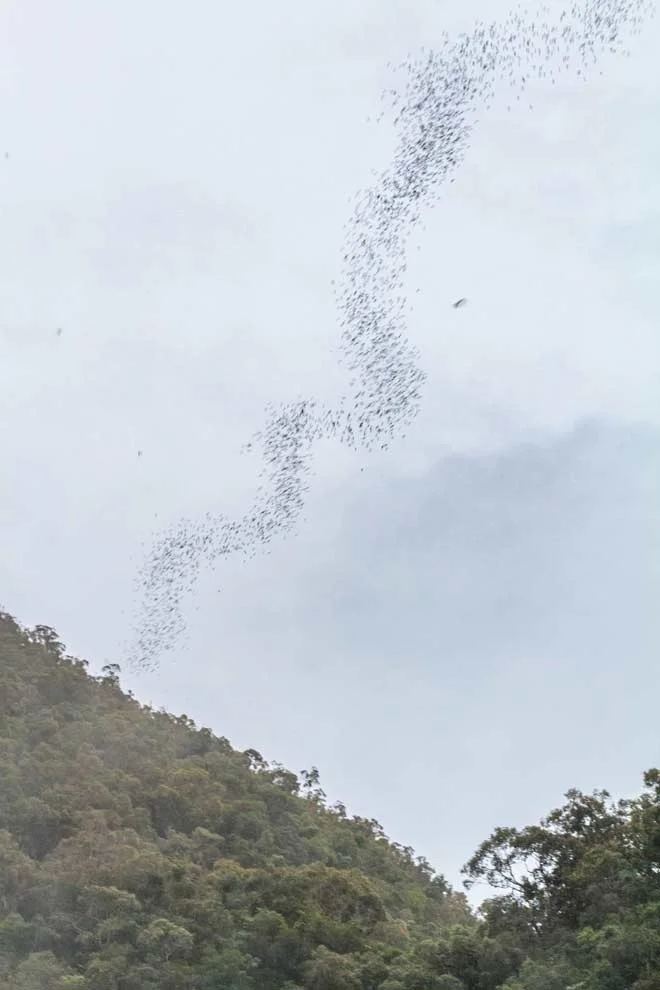
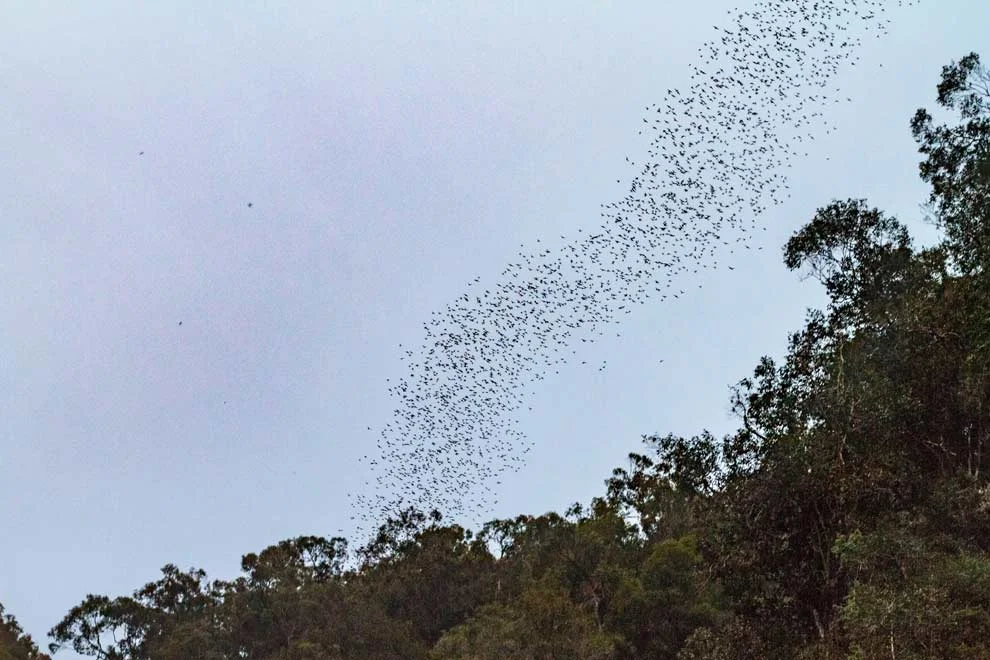
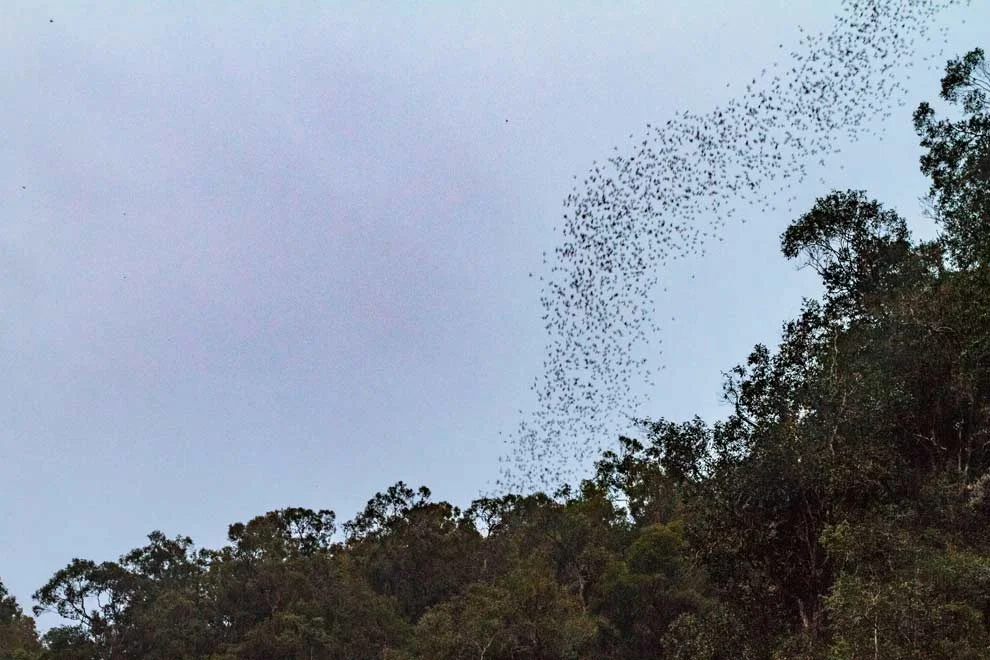
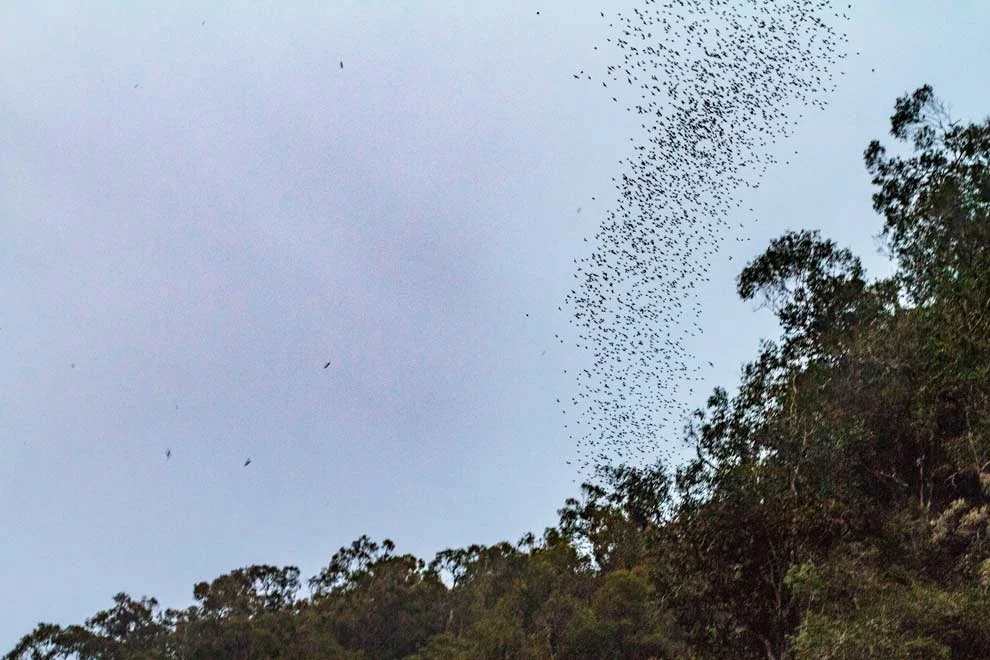
Not a lot is known about bats and why they fly like this. Bats are blind, but SHARP. Their sonar is on point.
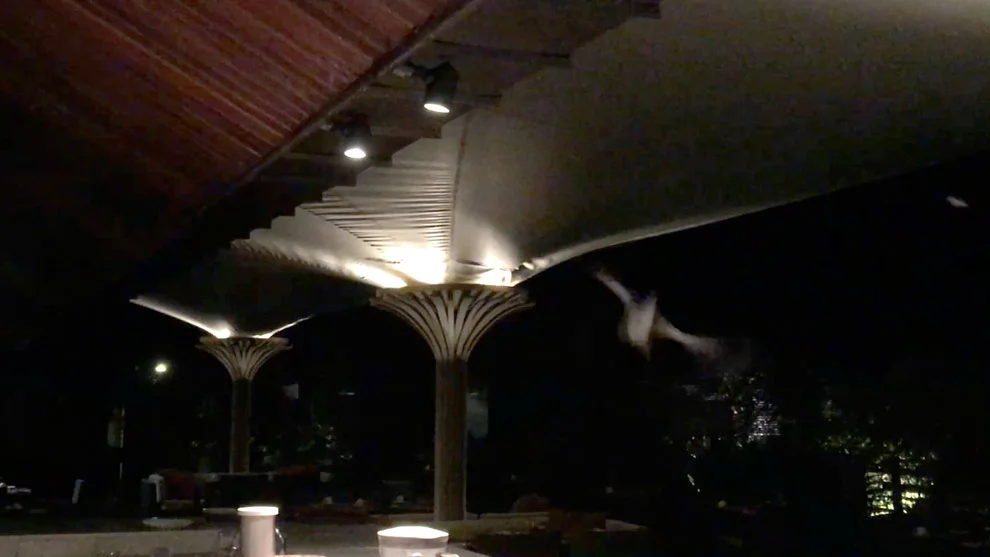
At my hotel the following night, I was having dessert at the pool bar, with a Dutch couple, and we realized bats were flying underneath the ceiling of the outdoor lounge and literally right over our heads. They’ll fly so close to you and so fast, but never hit you.
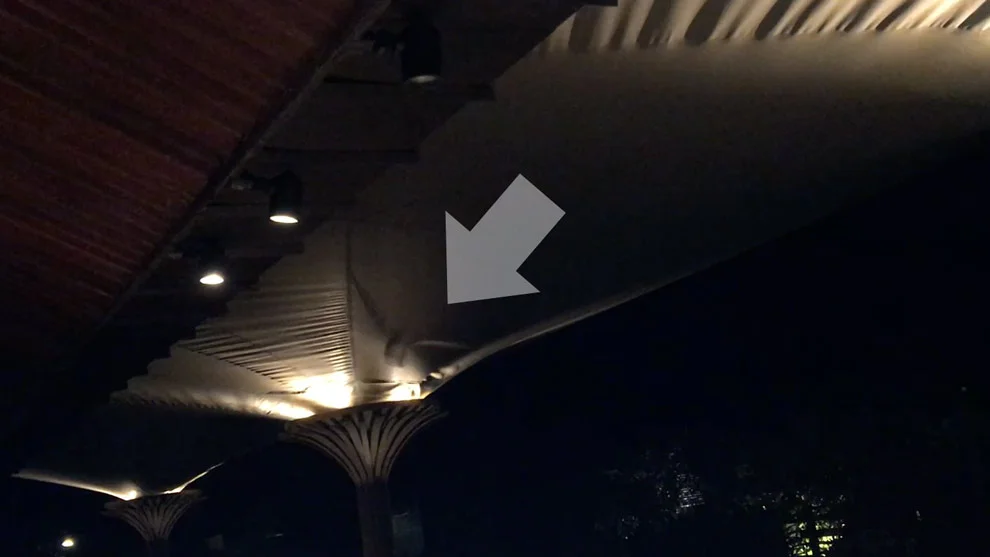
My, oh, my, Mulu is magnificent!
The idea of visiting caves that are fully encrusted in bat guano may sound gross to some, but for me it was spectacular.
Seeing the bats fly out of the cave was bananas. It was the icing on the cave cake.
That’s it for the Borneo’s Wicked Wildlife blog series. Borneo was one of the best travel experiences of my life because it was just so different and exotic. Never had been to the rainforest before ('cept one day in Iguazu Falls). But, Borneo was one week of wild and weird.
There is a buzz in the rainforest, literally. The sound of it is entrancing. And, I can hear still it in my sleep.
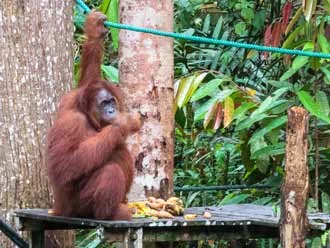
Borneo's Wicked Wildlife - Pt 2
No trip to Borneo is complete without seeing wild orangutans. Seeing animals in a zoo is depressing. Seeing them in the semi-wild is wicked sweet!!
No trip to Borneo is complete without seeing wild orangutans. Seeing animals in a zoo is depressing. Seeing them in the semi-wild is wicked sweet!!
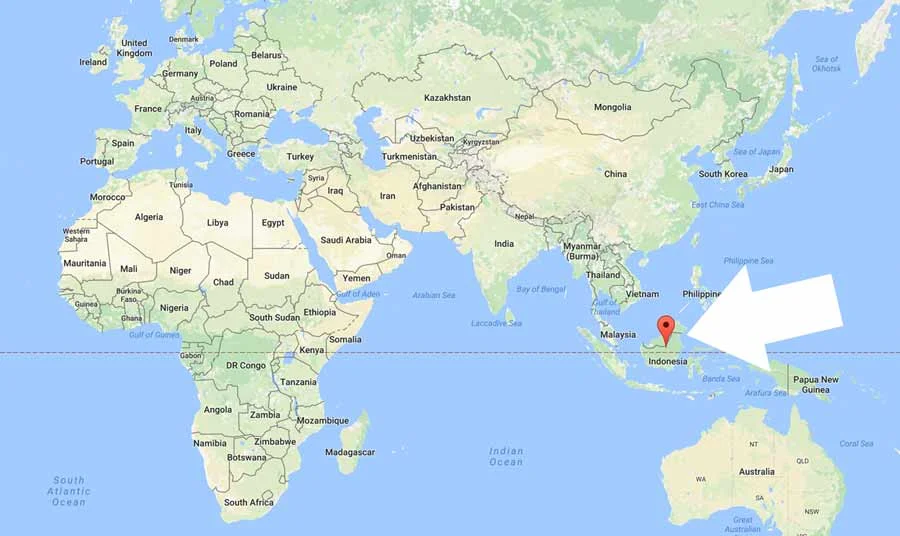
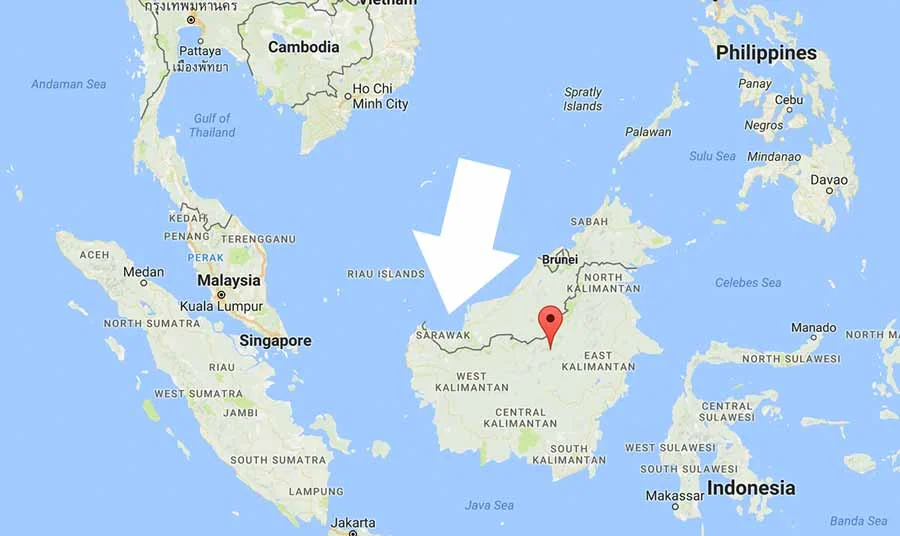
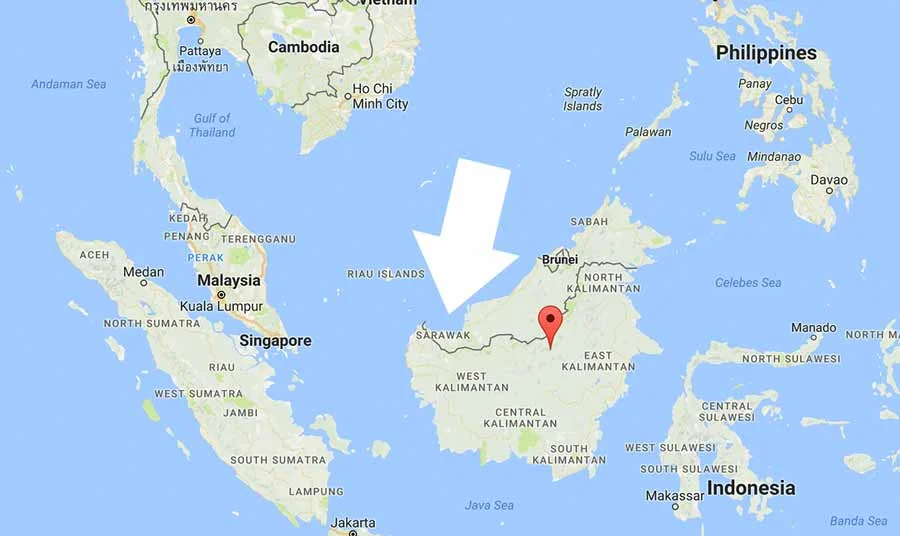
If you visit Kuching, you gotta go to Semenggoh Nature Reserve. It's less than an hour from the city. For a little context, Kuching is the capital city of the state of Sarawak, which is on the island of Borneo, which is part of Malaysia. Here is the map in case you missed the last post:
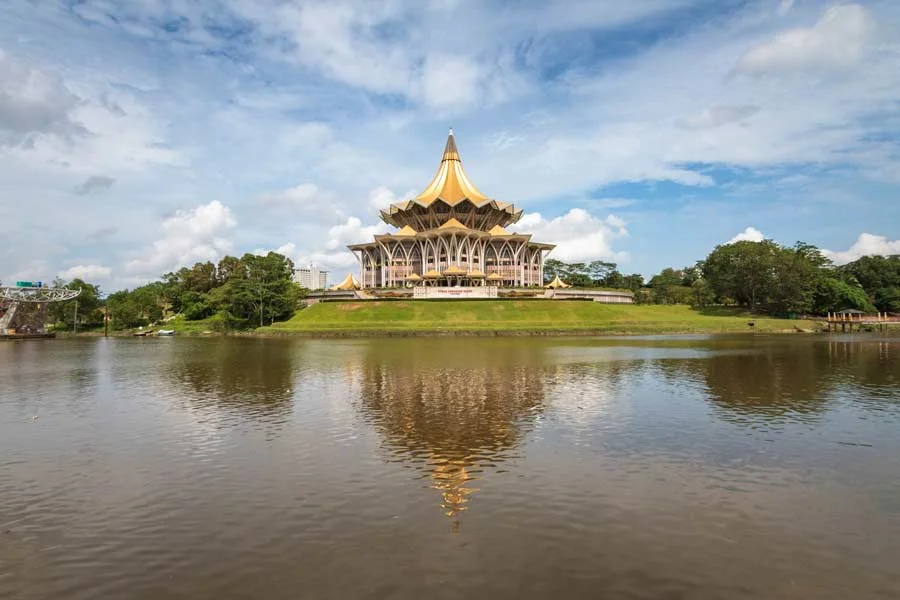
Here are a few snaps of Kuching to give you an idea of what this charmingly cute and colorful little island city is like. (THANK YOU to Fritztastic and Celeste for recommending it!)


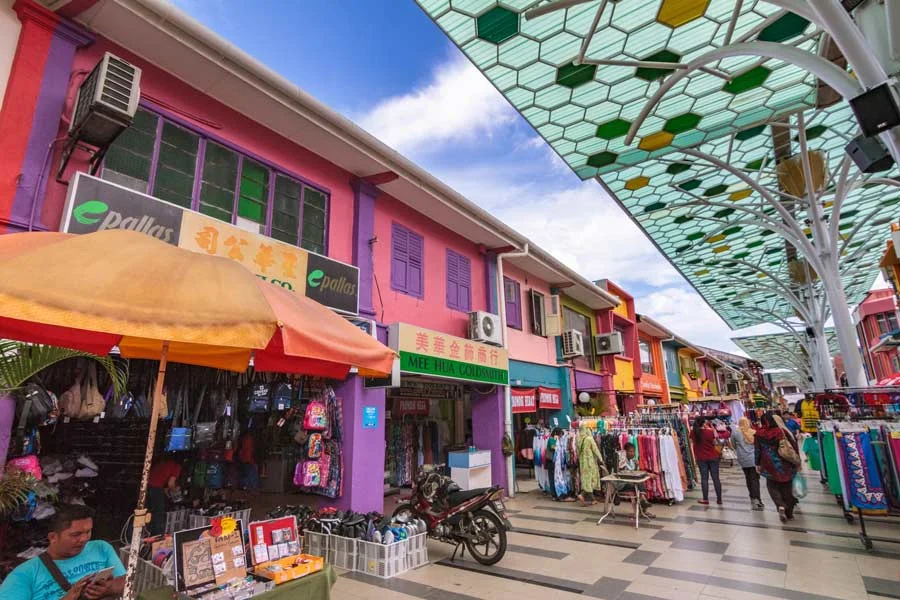
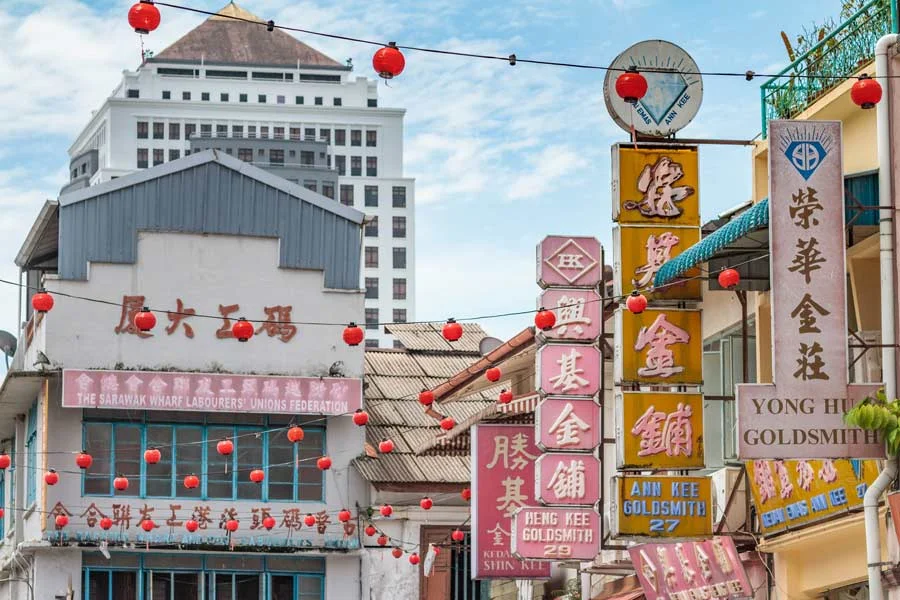
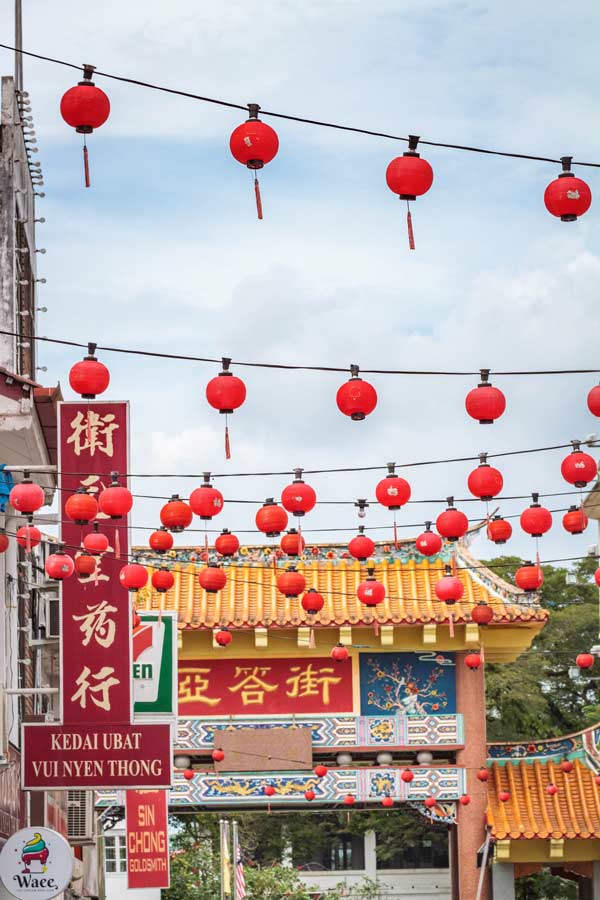
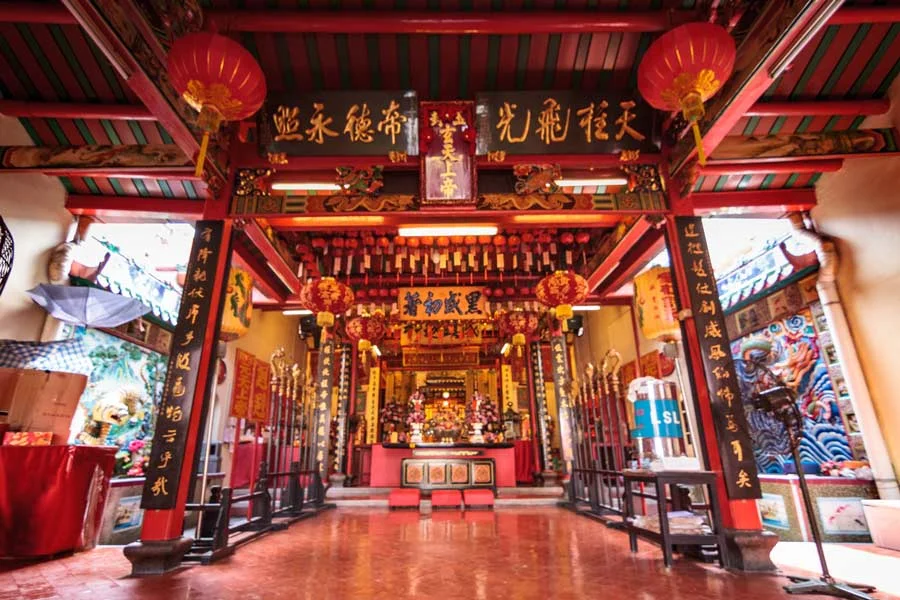

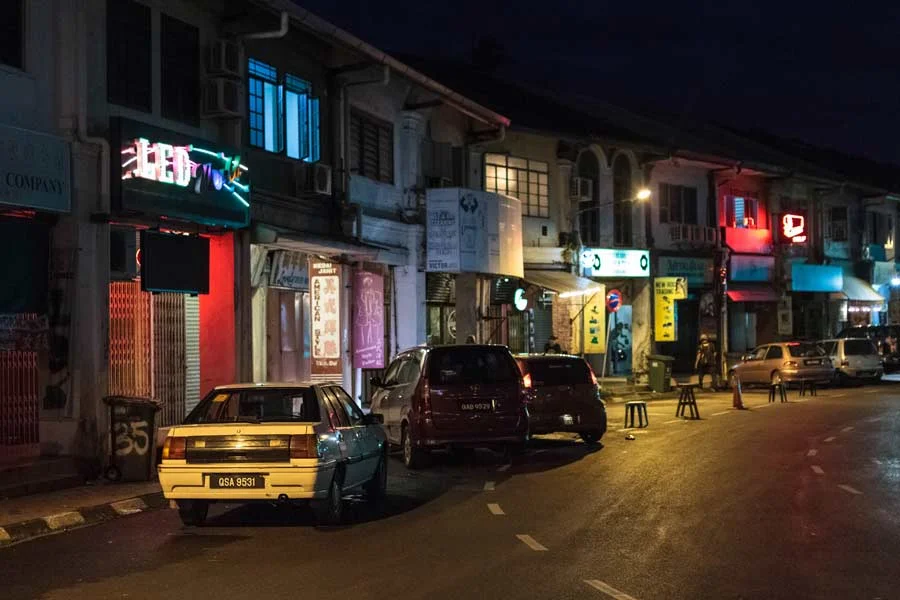
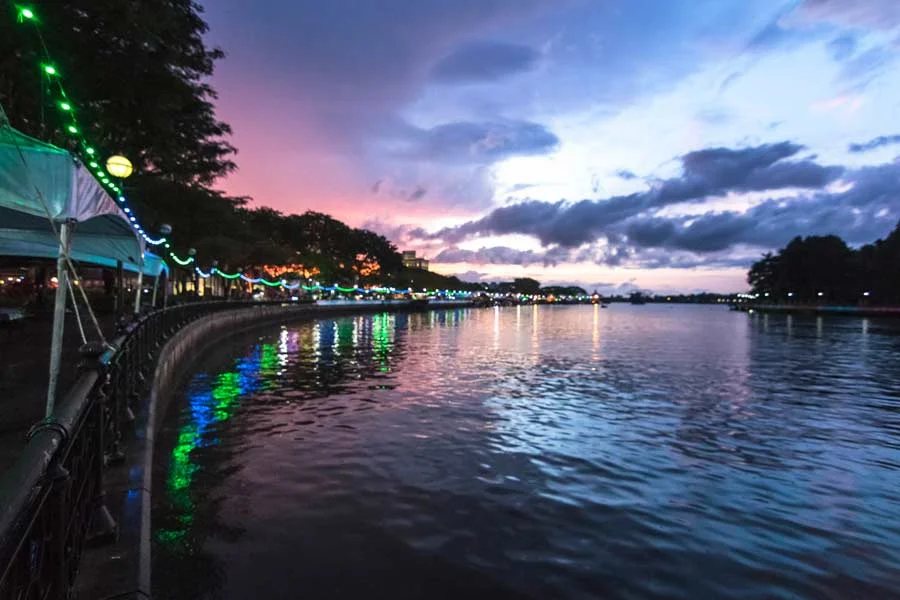
Ok, back to the wildlife. You probably are wondering why I said "semi-wild"? The Semenggoh Wildlife Center was set up in the 1970's as a rehab center for injured animals. They help sick animals and then release them into the jungle.
Semenggoh basically acts as a feeding center for the endangered Bornean Orangutans. Twice a day they call out for them and if they come, they get to eat fruit. During the fruitful seasons in the jungle, the orangutans don't even show up, cuz they're full. This makes the staff happy, but the visitors sad.
Semenggoh is actually a little controversial, because some think we are intruding on their space too much. See the article here. I didn't see any problem with it. They're endangered and making sure they are fed seems like a good thing long term.
There are a bunch of other areas on Borneo where you can see orangutans truly living in the wild. I've already got a spot I want to come back to: Danum Valley in Sabah (just up the coast on Borneo) came recommended by a guy who guides up there, and it is home to Proboscis Monkeys, Orangutans AND Pygmy Elephants. YUP, I'll be back.
Feeding time is 9 - 10am, and then the afternoon. I went at 9am based on the recommendation of a fellow traveler --- thanks Yogginy! Higher likelihood of seein' 'em early.
The workers led us on a short hike to get to the feeding area. And then, they call out to them, yawping wildly into the jungle every minute or two.
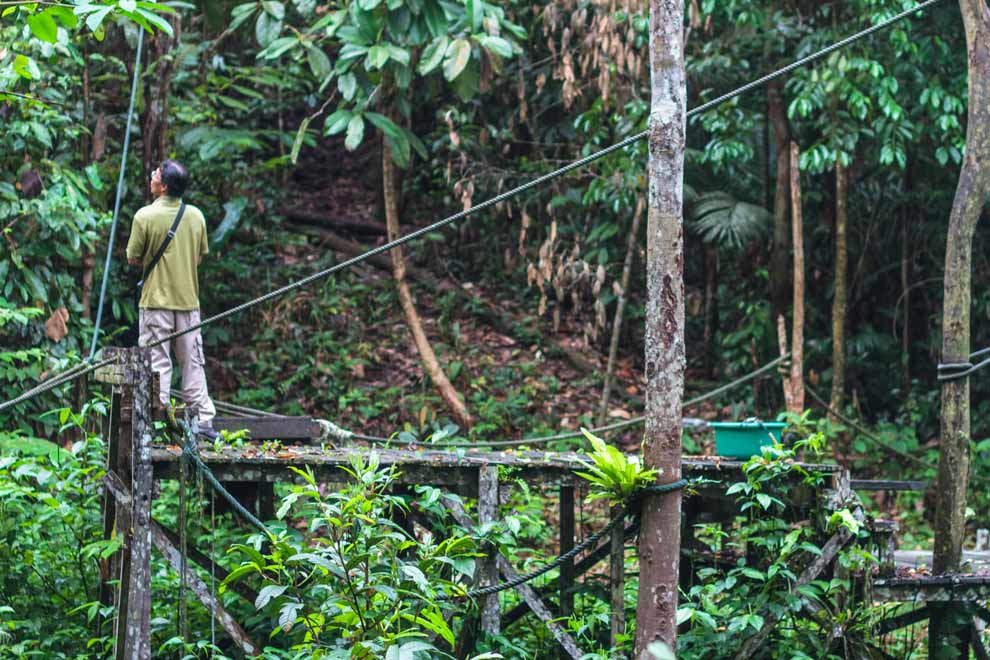
We waited. And waited.
9:15. No orangutans.
9:30. No orangutans.
At this point, the crowd seemed defeated. The adrenaline had faded. I started taking pics of cool jungle flora.
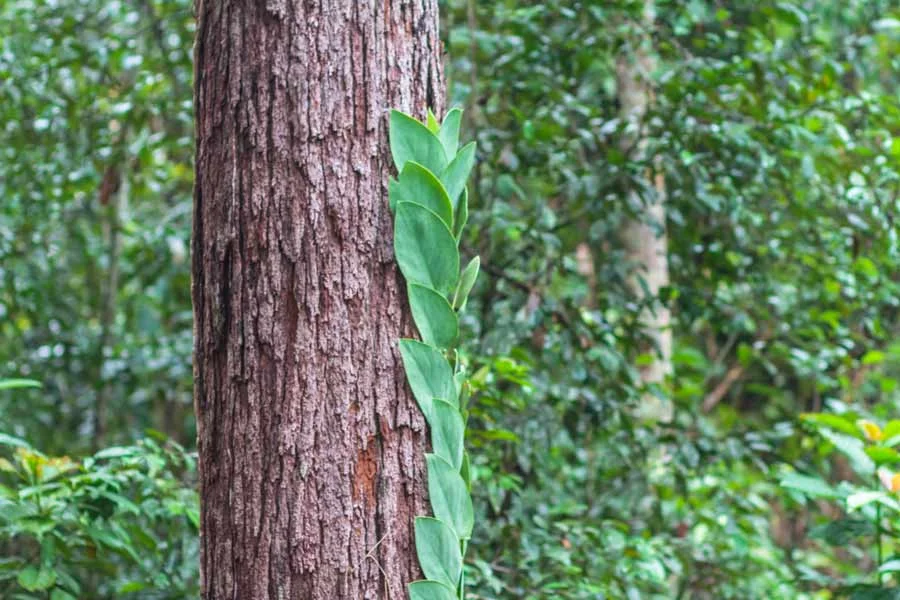
Then, all of a sudden...we see large treetops swaying irregularly way off in the distance.
The excitement was palpable!
And then, the tree next to it started swaying...they're getting closer!

The first sight of one off in the distance, was unreal. I've seen orangutans in zoos before, but this was like Jurassic Park type stuff. Thrilling!
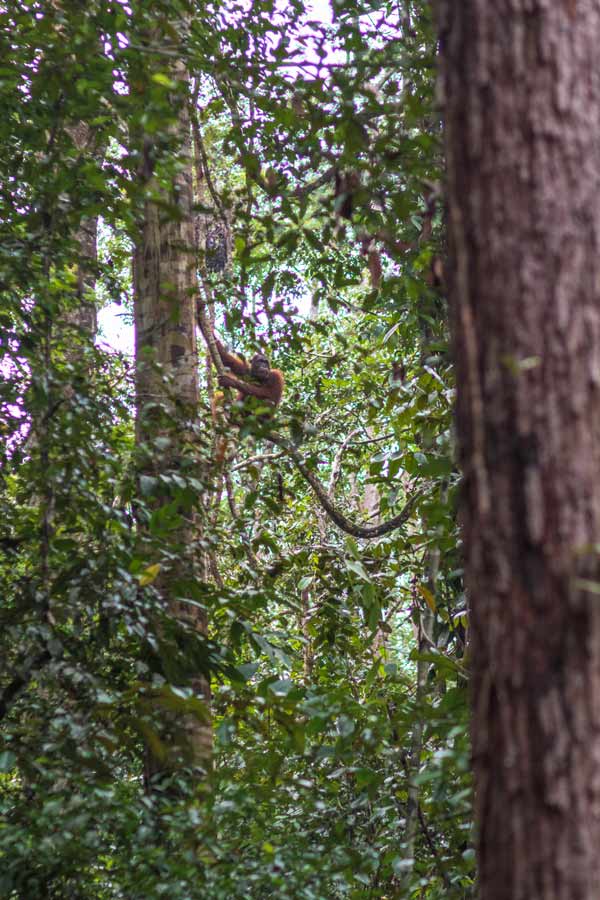
These guys are so acrobatic and flexible.
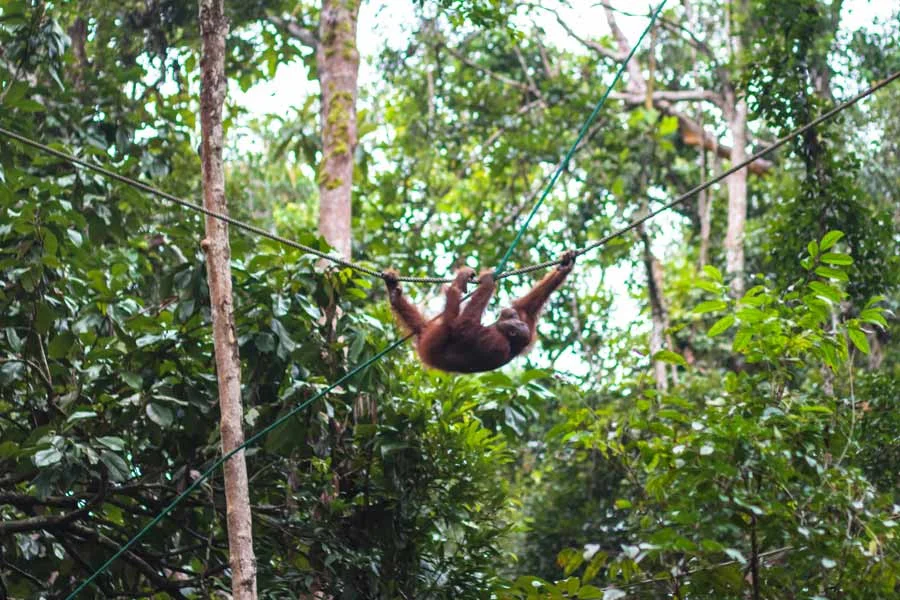
They seem like they are having a blast as they are climbing trees, swinging and swaying.
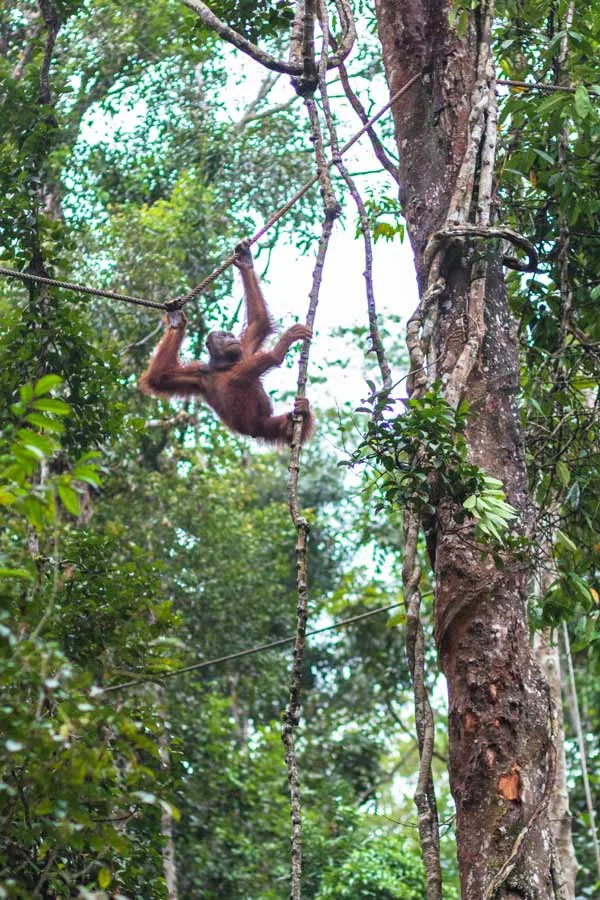
It's just their way of moving around, but arboreal locomotion just looks so fun! Who wouldn't want to be Tarzan, swinging from vines? Maybe I should get into trapeze...
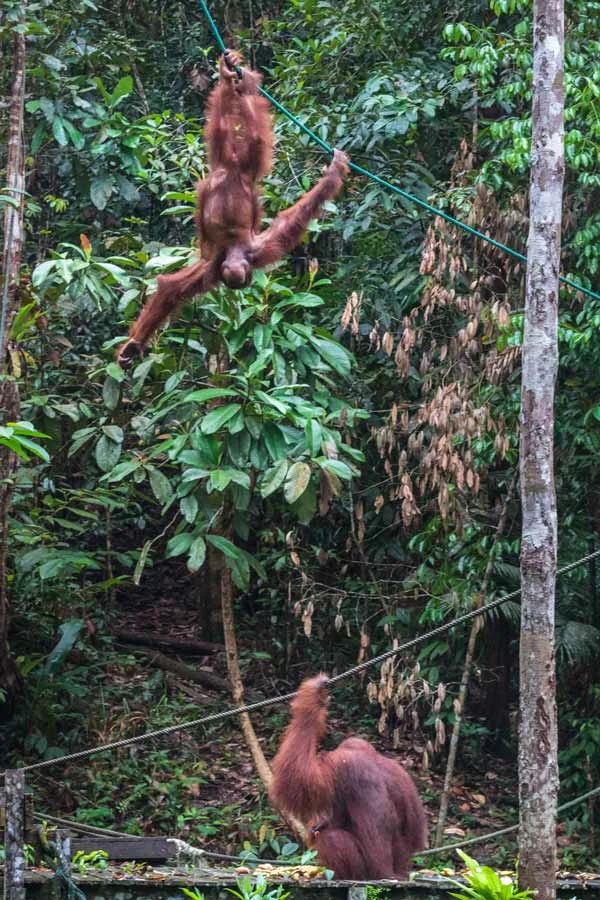
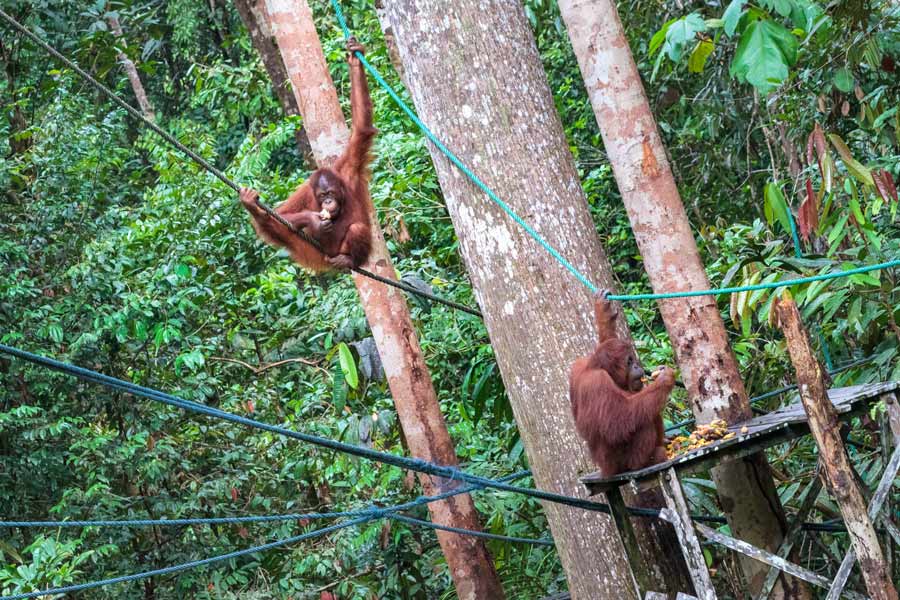
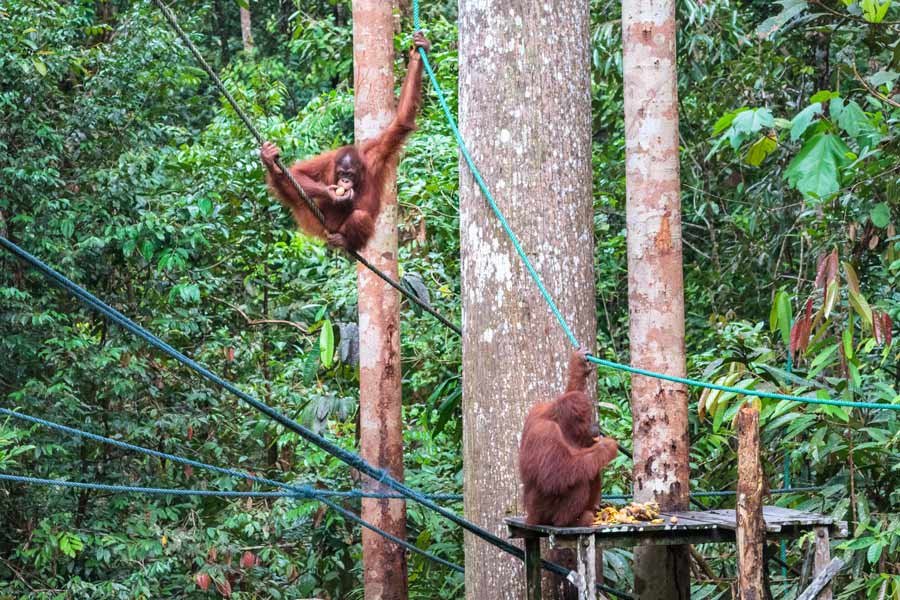
2 came out to get their fruit on and we watched them for about 20 minutes.
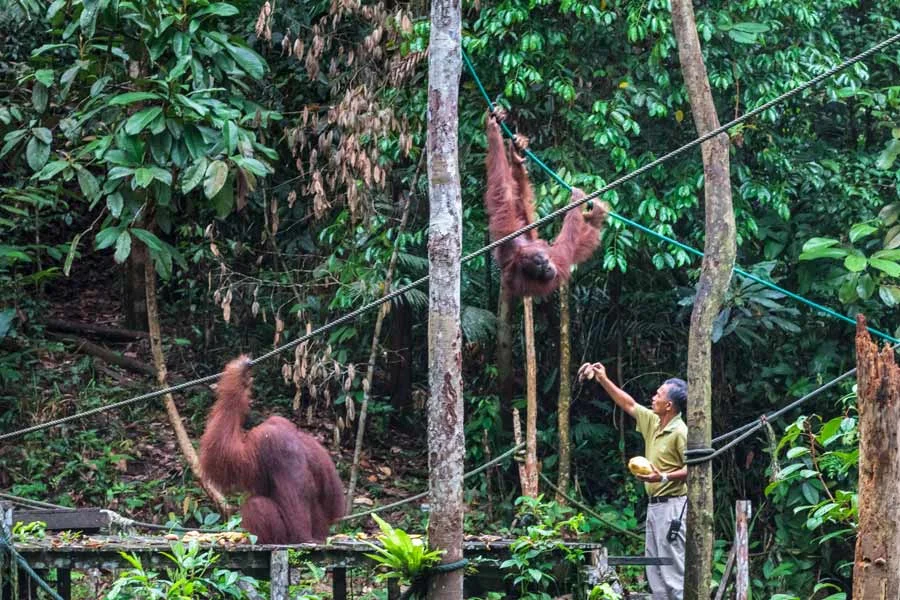

They did not come close to the crowds like when Yoginny was there. But, I didn't mind. Call me crazy, but I tend to appreciate a bit of distance with wild animals.
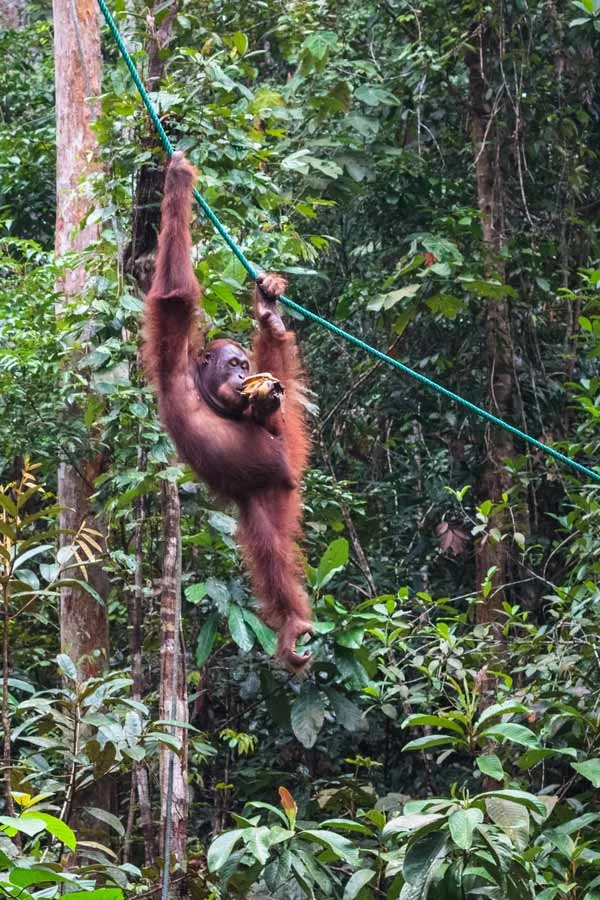
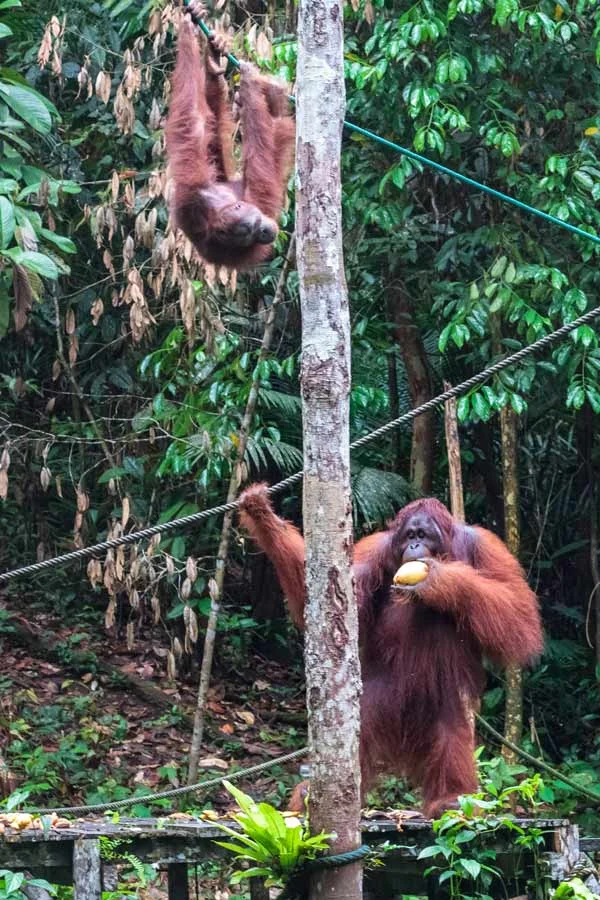
For the most part, they had their backs to the crowd.
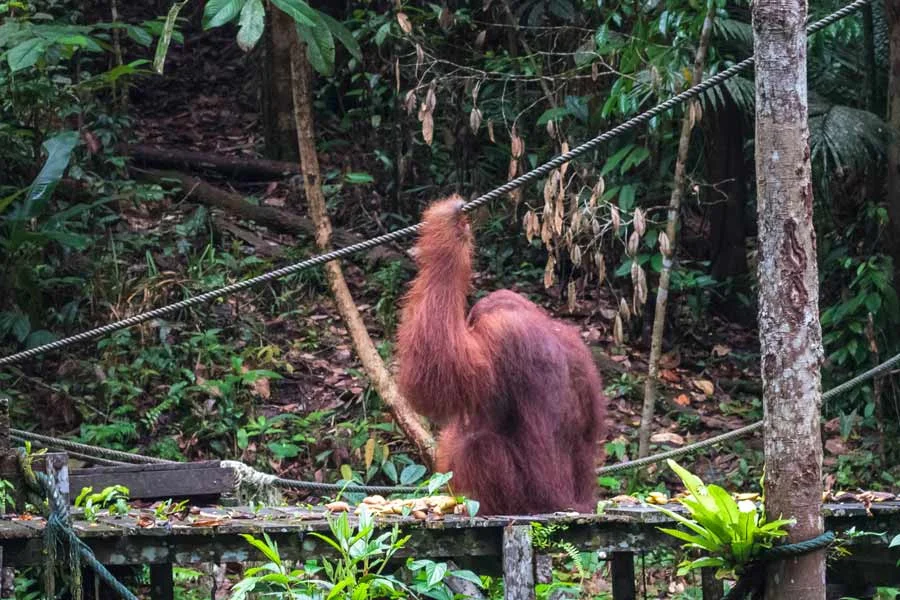
But, every once in a while, they would check us out.
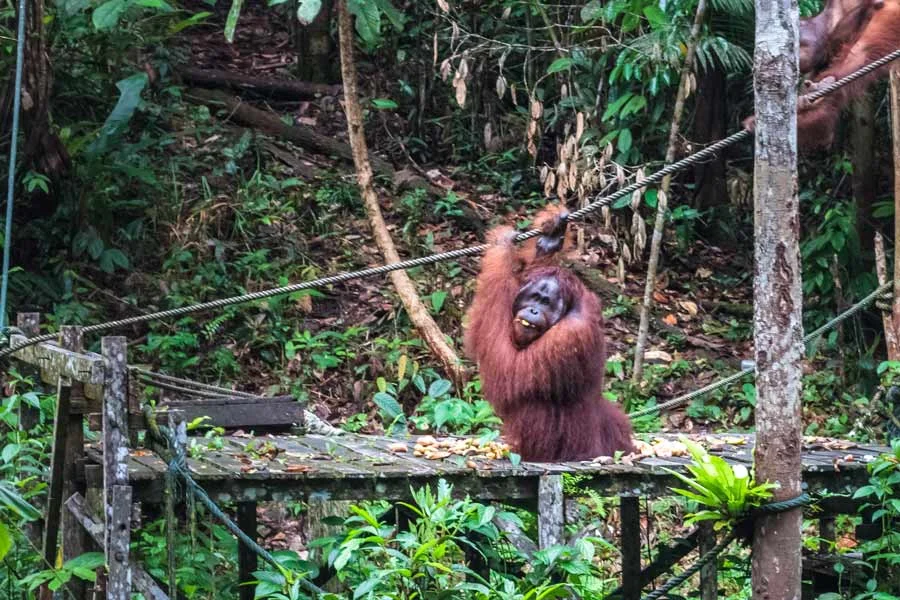
I love how they hold the fruit with their feet, and use their hands to eat---all while holding on to the ropes. Amazing animals.
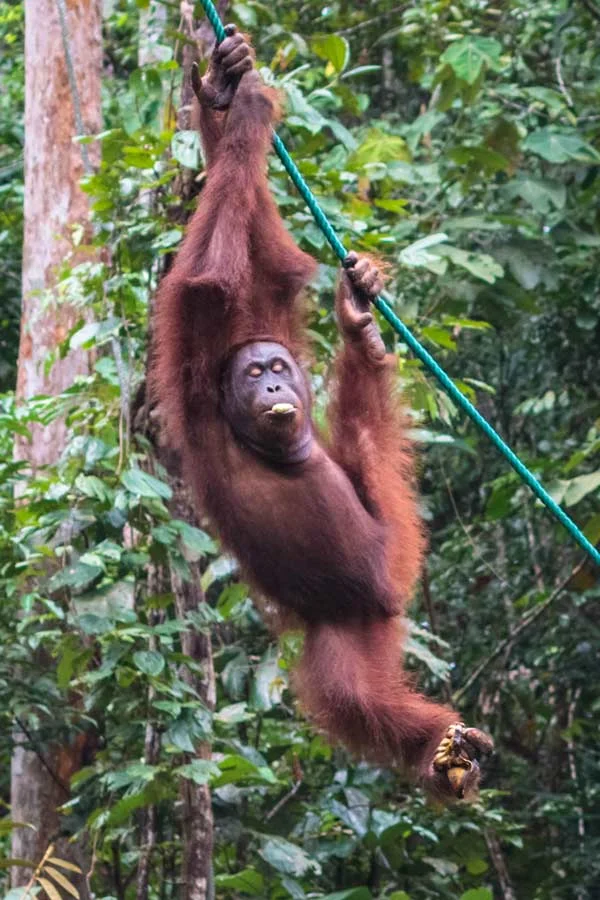
After about 15 minutes, one of the feeders announced that there were two or three baby orangutans approaching the front area if we wanted to see them.
When he said babies, I had this vision of orangutans in diapers, sucking on passies. But, naw, these babies look pretty grown to me.

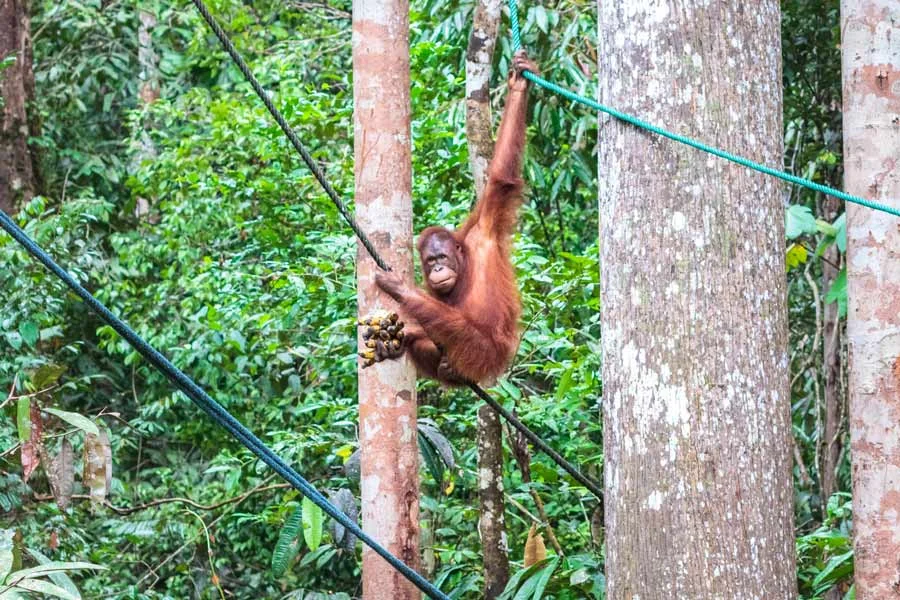
Look how flexible this one is. Doing a split, holding his weight with his toes, while scarfin' some fruit.
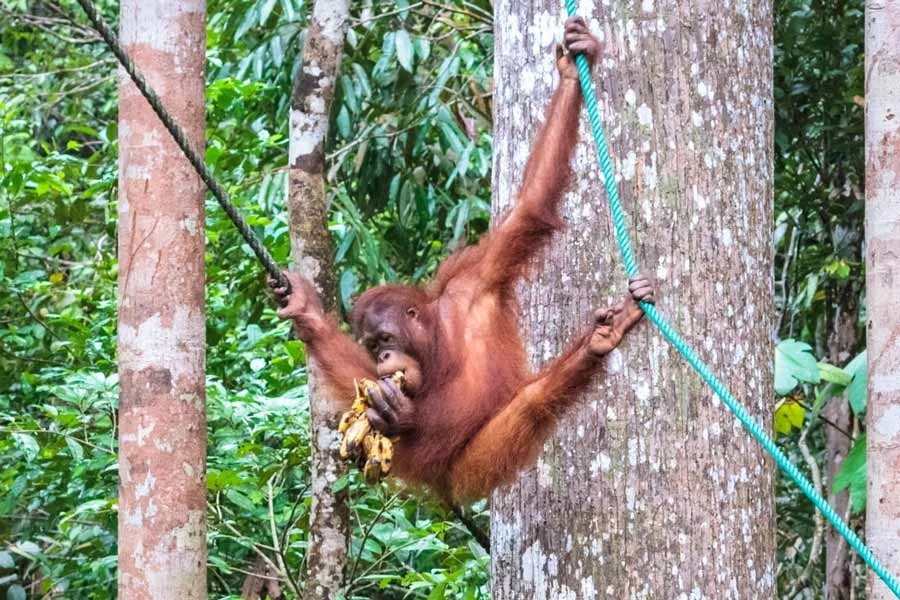
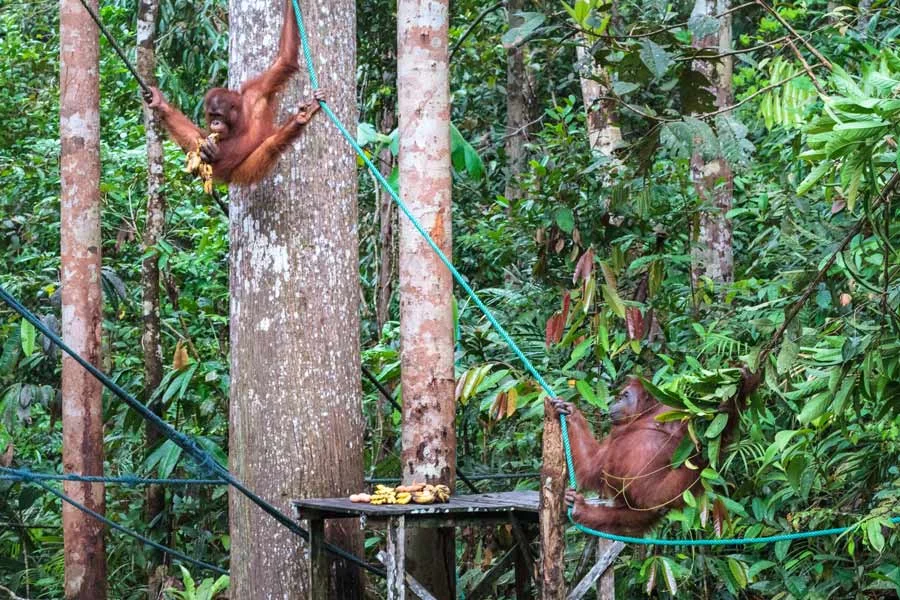
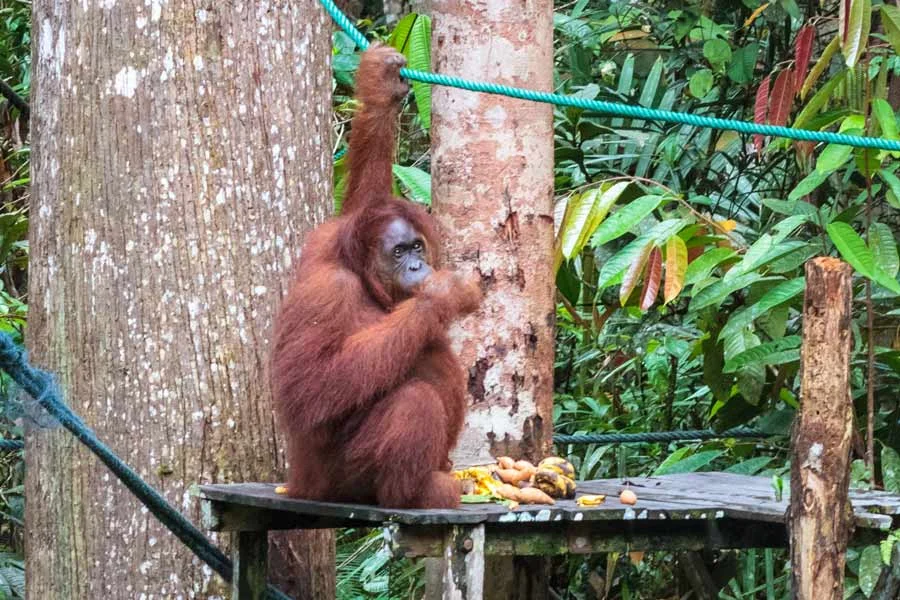
10am, feeding time was over! But, I'm thoroughly happy with my visit to Semenggoh. Thought I was gonna get skunked. Instead I got orangutan-ed.
Next up...the grand finale! Borneo's Wicked Wildlife Part 3.
Ever wonder what millions of bats look like flying out of a cave, all together in formation!?!? Subscribe to my blog, cuz you don't wanna miss the next post.
Borneo's Wicked Wildlife - Pt 1
The island of Borneo boasts the most wicked wildlife! Because of the climate, the rainforest is home to the most species of life on Earth. I went to Borneo for Thanksgiving on a solo journey and here is part 1 of Borneo's Wicked Wildlife!
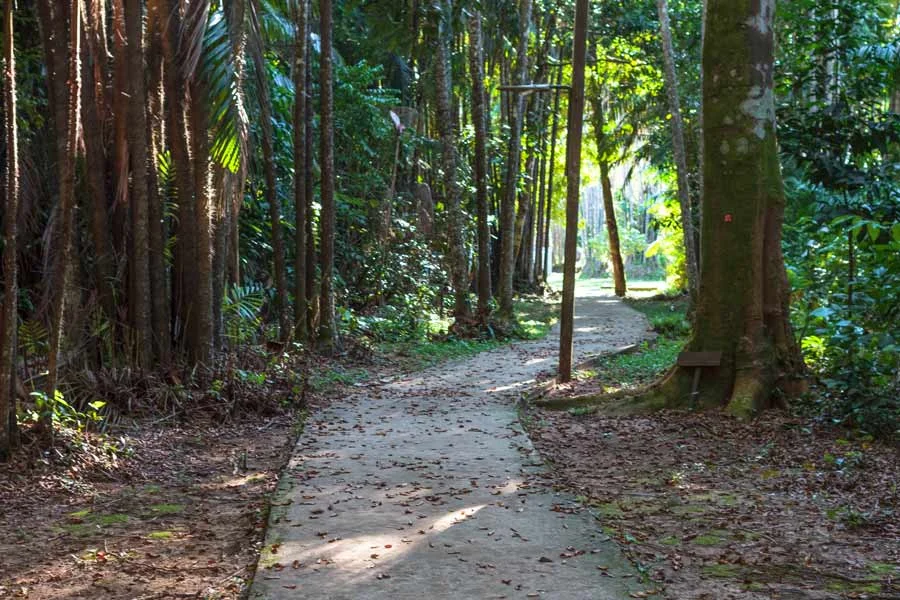
The island of Borneo boasts the most wicked wildlife! Because of the climate, the rainforest is home to the most types of species of life on Earth. From plants to insects to animals, it is lush in life. And, it's simply gorgeous.
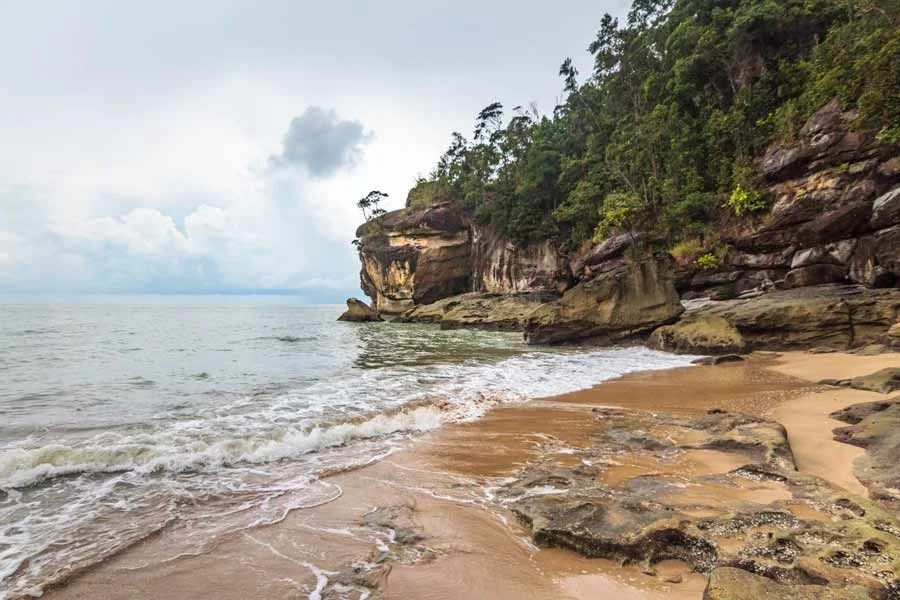
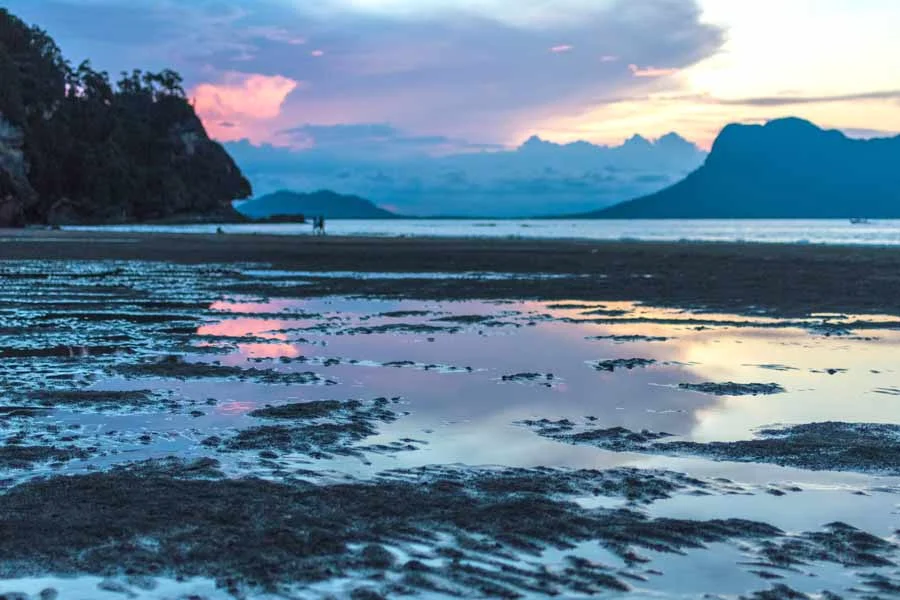
So I went on a solo journey over Thanksgiving to explore and see what this wildlife was all about. Best travel week of the year. (Maybe because I was not working?)
I could write for days about the trip and all of the interesting things I saw. But I want to focus on the wildlife. This is the 1st in a 3-part series:
Pt 1 - Bako National Park
Pt 2 - Semnggoh Nature Reserve
Pt 3 - Gunung Mulu National Park
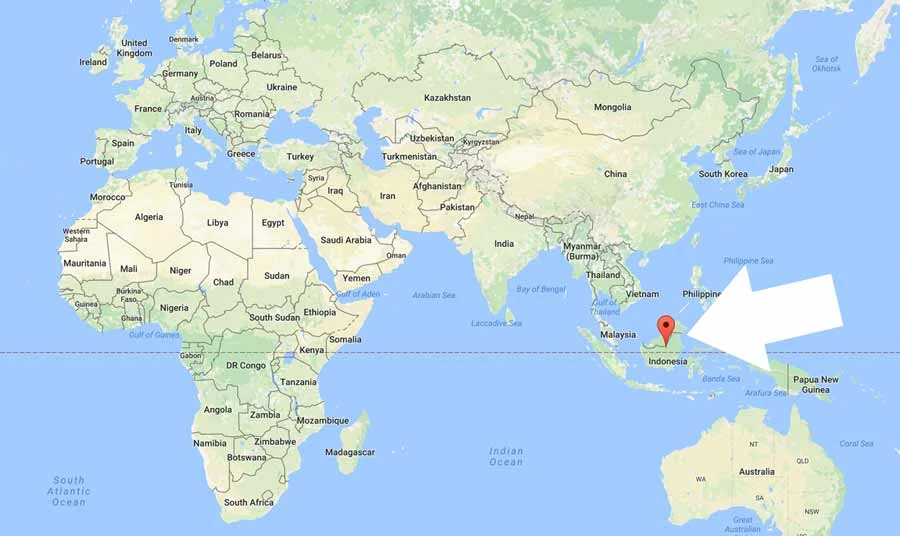
First, you’re probably wondering, where is Borneo? Well, Borneo is the largest island in Asia and the 3rd largest in the world. The island is split between 3 countries: Malaysian, Brunei and Indonesian. And it’s in the South China Sea:
Bako National Park was out of this world! It came well recommended from Remote Tom, and cousin Jeffrey SS Johnson whose story of getting robbed by monkeys had me geeked to the gills.
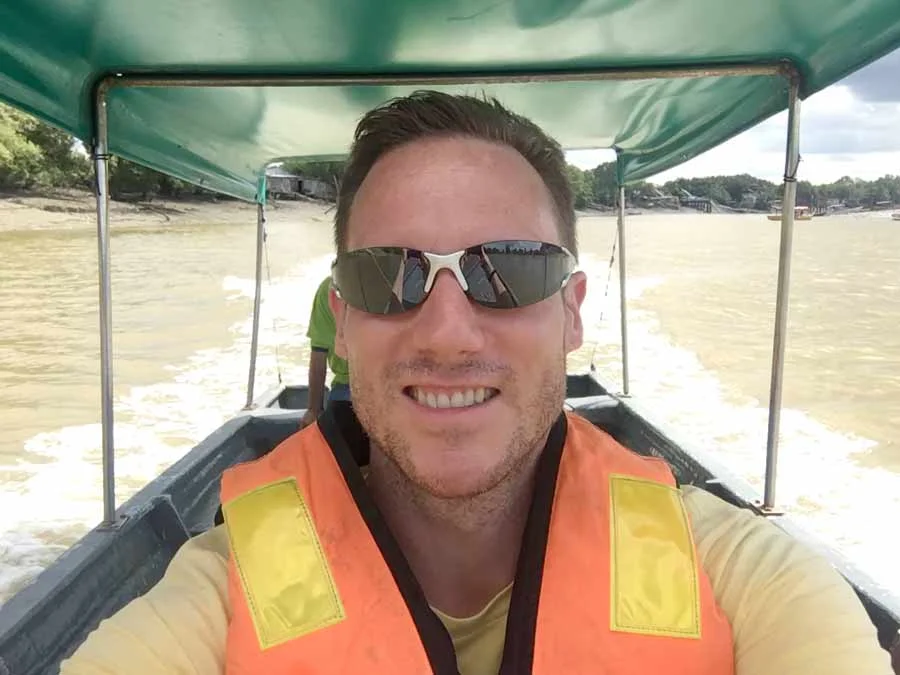
You have to take a ferry to get to Bako. This ferry was a tiny river boat. A ferry for one.
At the landing, you learn of the crocs in the water. GULP.
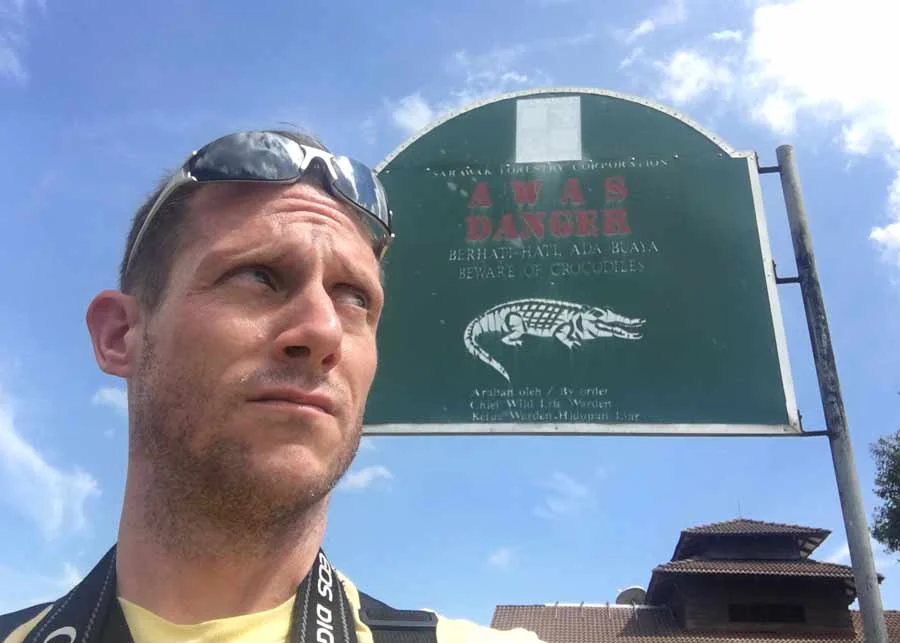
Guess I won't be swimming in the water, just swimming in sweat. It is unfathomably hot and humid in the jungle.
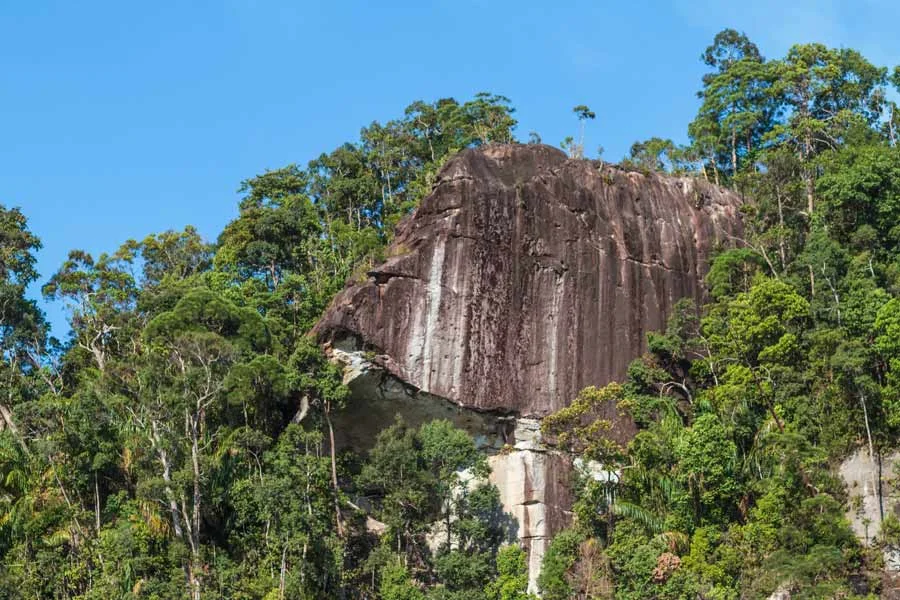
Bako is known for being home to the endangered Proboscis monkeys, among many other wild things. It features 14 different hiking trails, and you can see different plants, animals, birds and insects depending on which trail you take.
And it's got this weird awesome vibe about it. Almost like Jurassic Park. Or the LOST island.
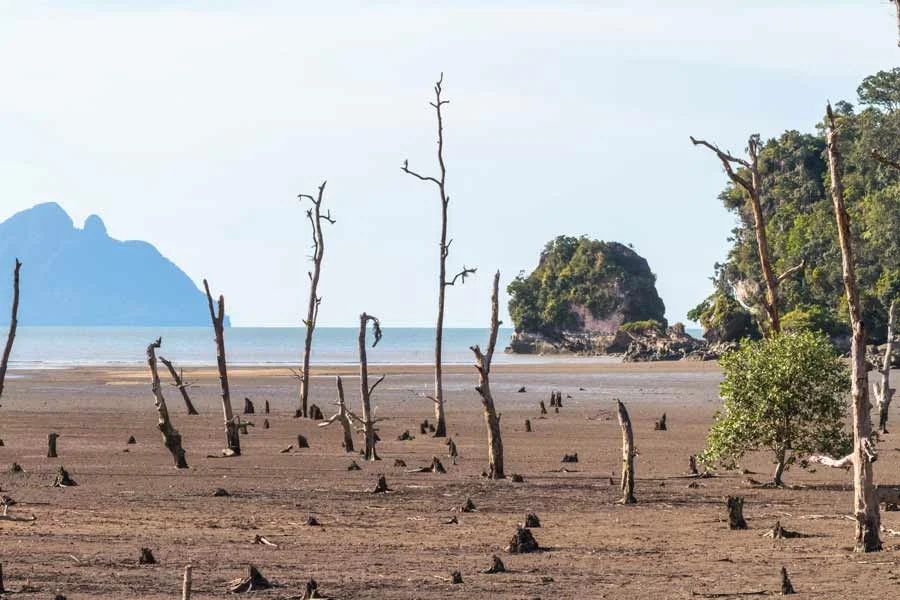
In addition to the day time hiking, they also offer a somewhat spooky, guided night hike, into the deep and dark jungle with flashlights to find nocturnal animals. Not many pics from the night hike. A little dark.
I was only on Bako National Park for ~24 hours and here's a list of the things I saw:
Proboscis Monkeys (Endangered)
Crab Eating Macaque (Monkeys)
Flying Lemur (Sadly did not get to see it fly. It was just hugging a tree.)
Snails
Mudskippers (Kinda like flying fish)
Swallows (Birds)
Tortoises
Spiders
Centipedes
Scorpions
Frogs
Praying Mantis
Shell Dwelling Hermit Crabs
Spotted Gecko
Lizards
Grasshoppers
Mosquitoes
More Mosquitoes
Did I mention Mosquitoes?
All in all, the most exciting species were the endangered Proboscis Monkeys!
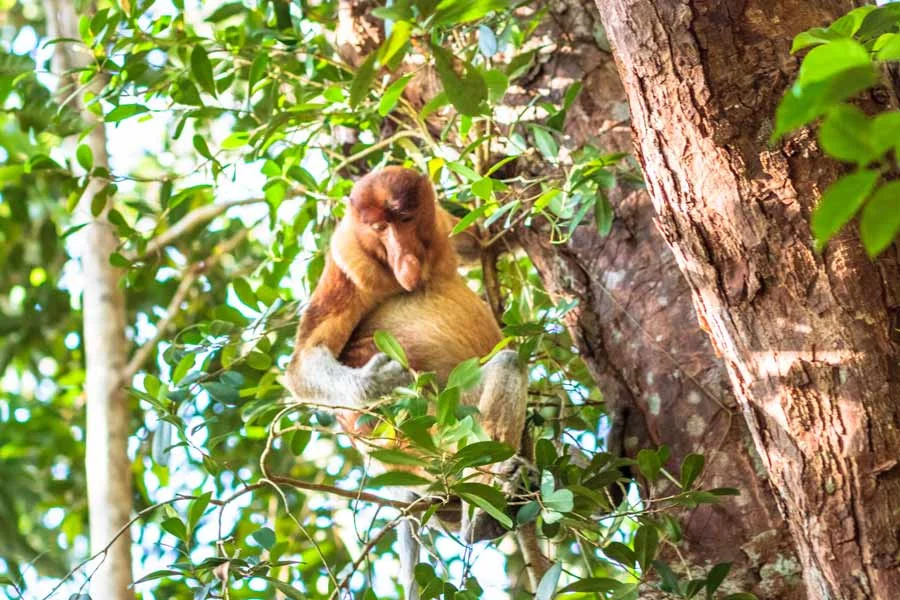
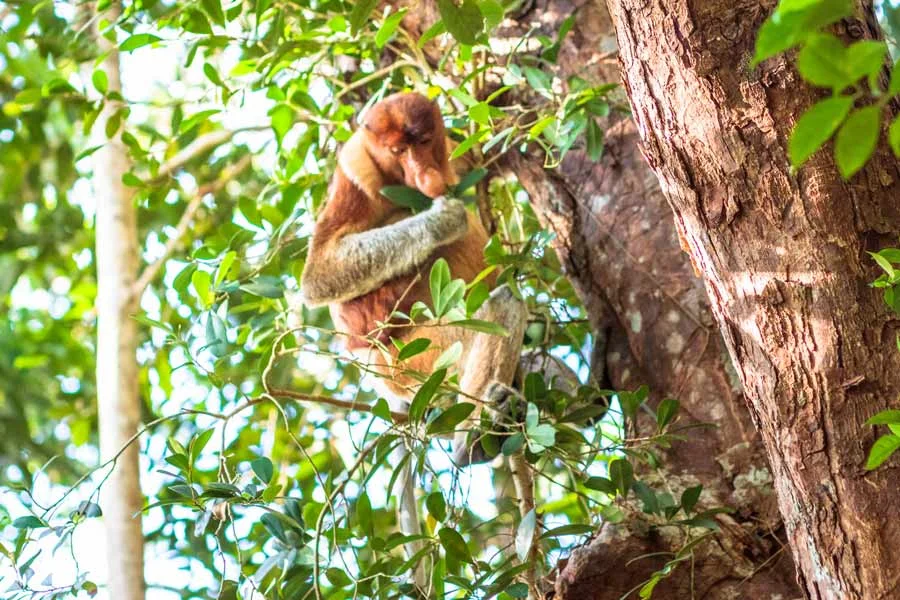
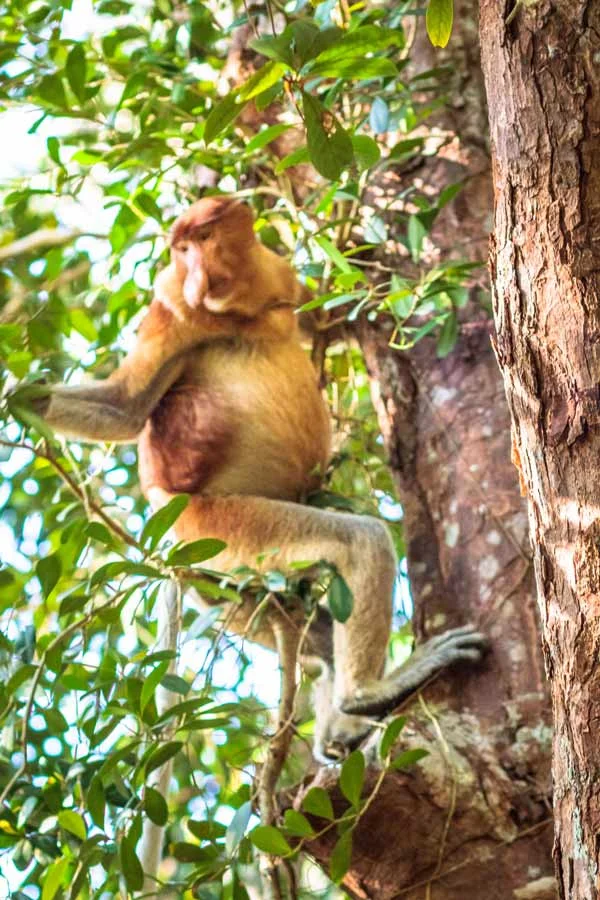
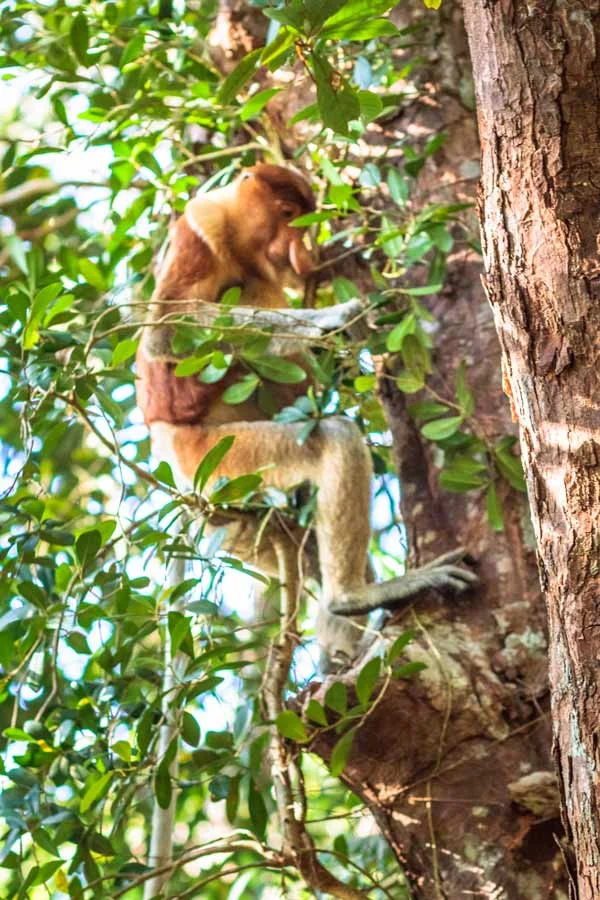
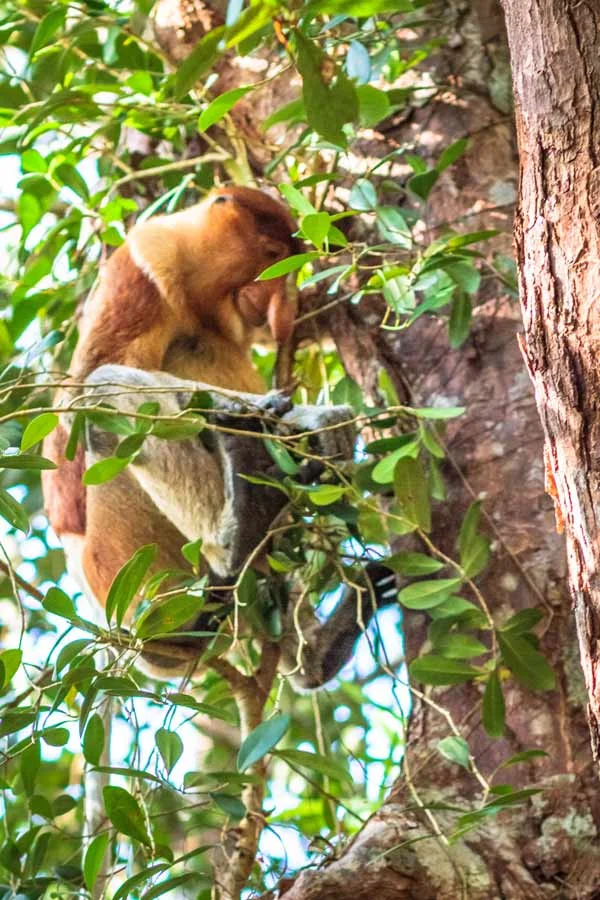
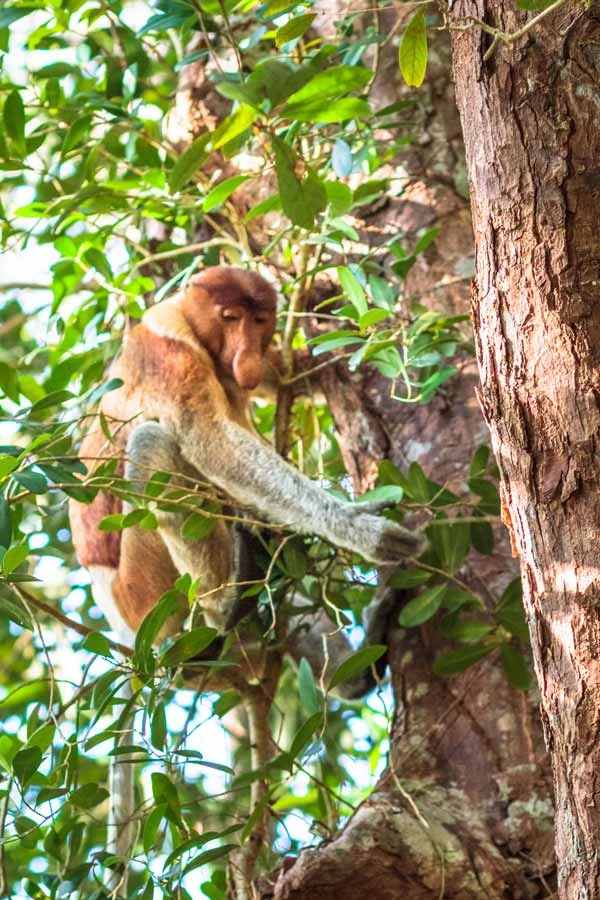
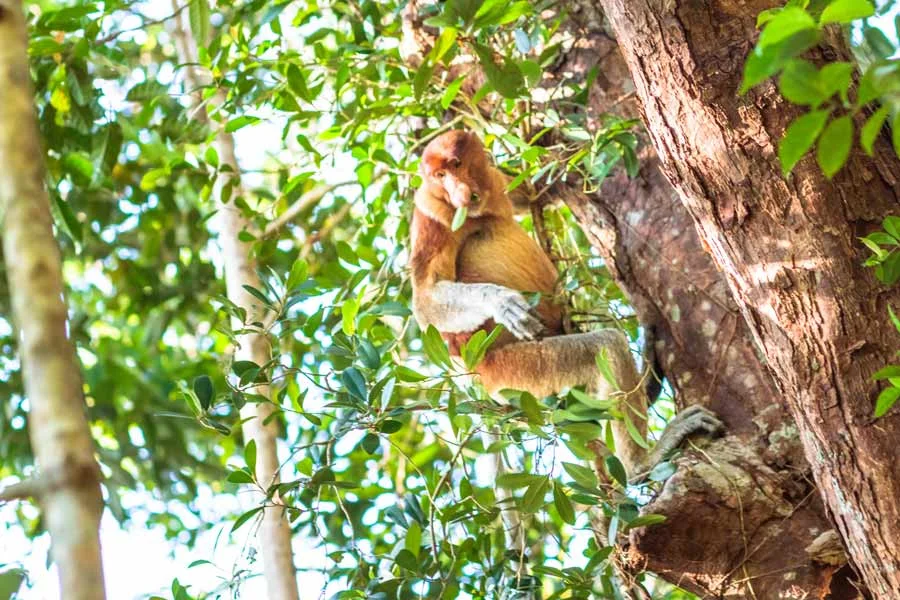
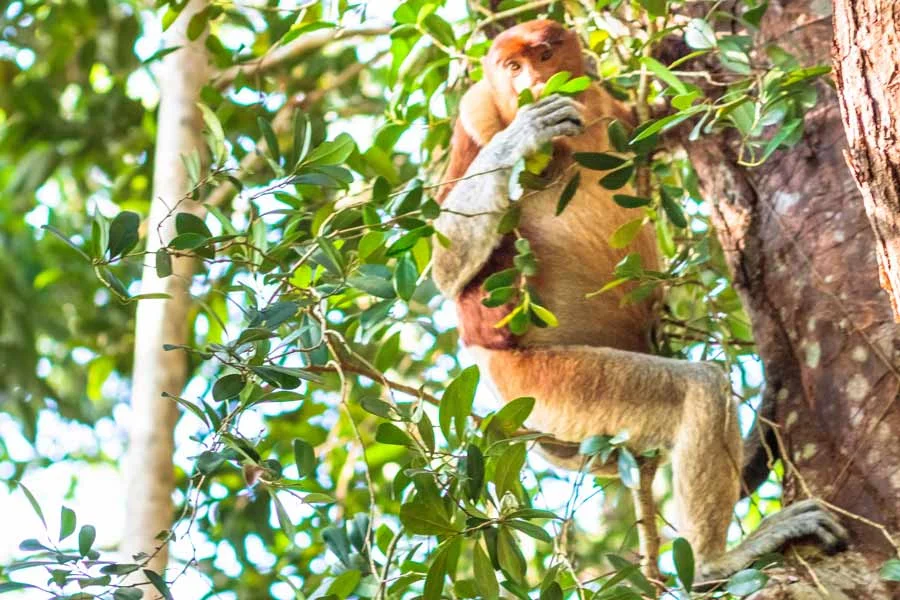
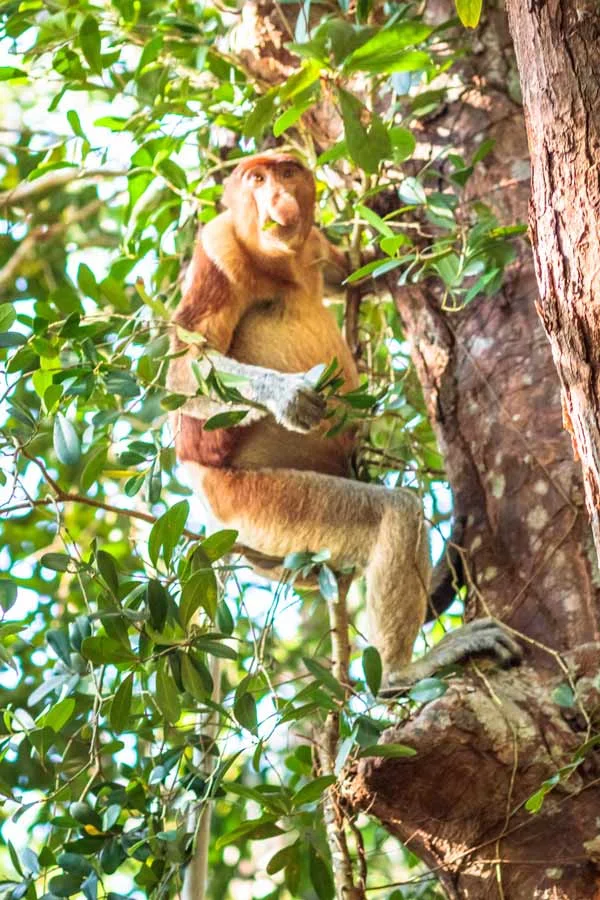
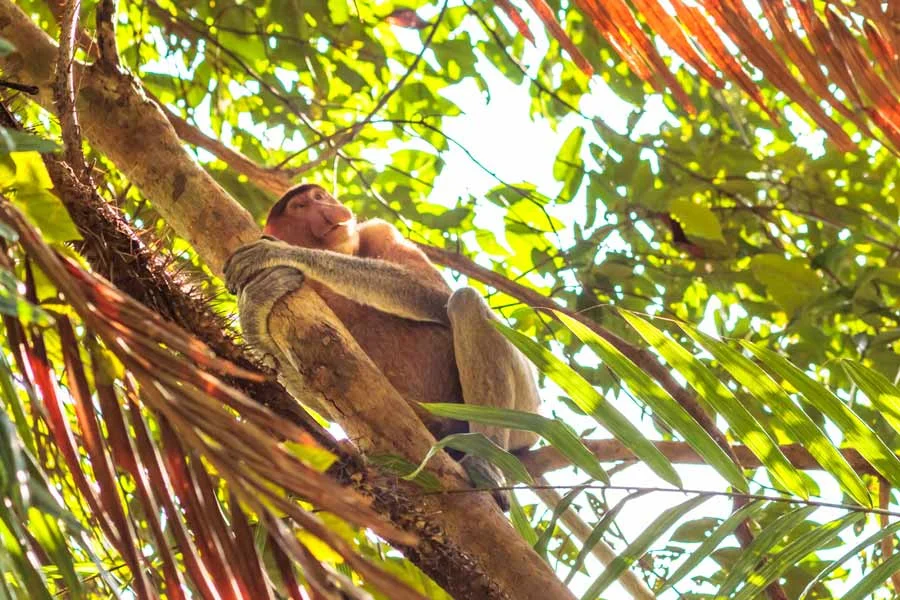
Proboscis Monkeys, aka Long-Nosed Monkeys are all over Bako. They look like humans with their pot bellies & long noses. My first sighting was my best. As I was heading to the hiking trails I stumbled upon 3 eating in a tree ~10 yards away, right out in the open.
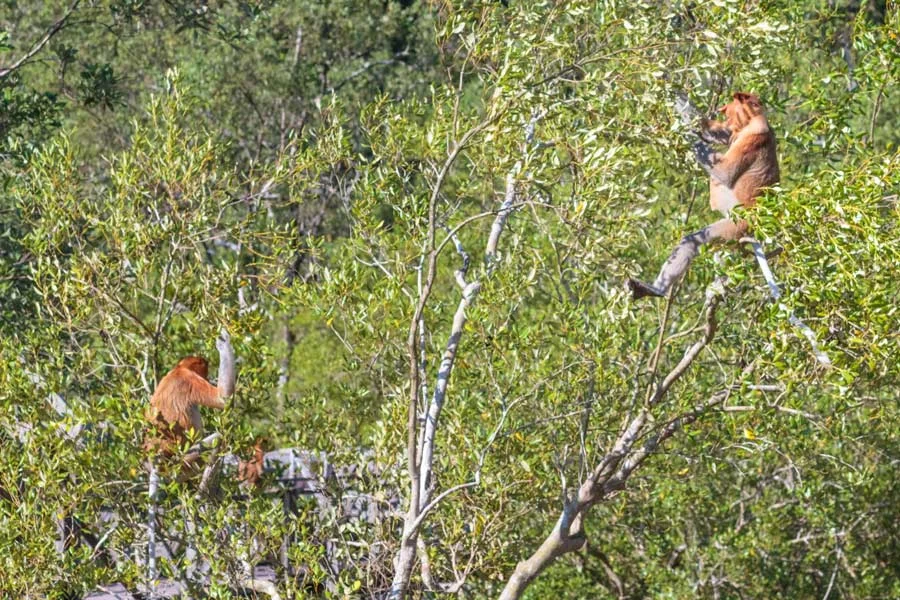
The 3rd one was behind these guys, a bit lower.
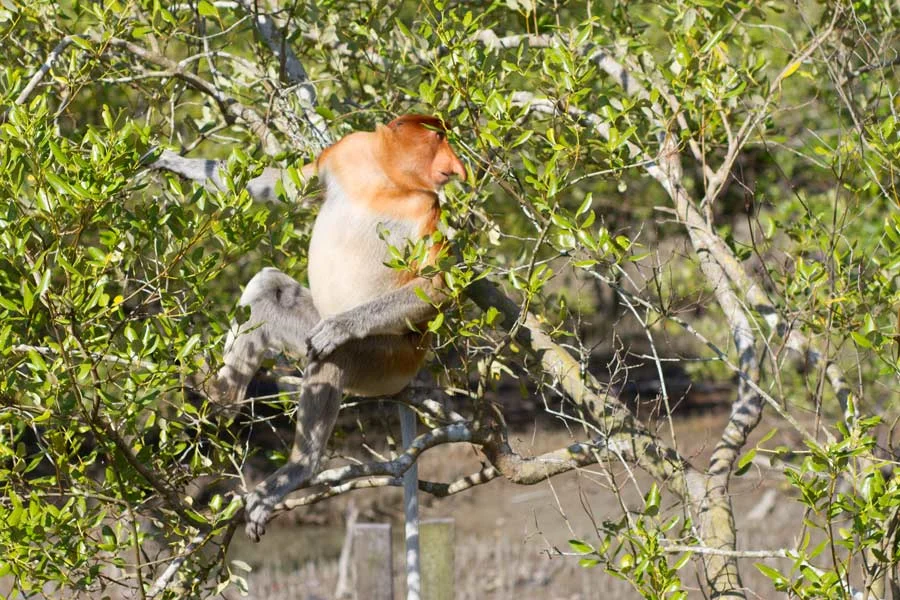
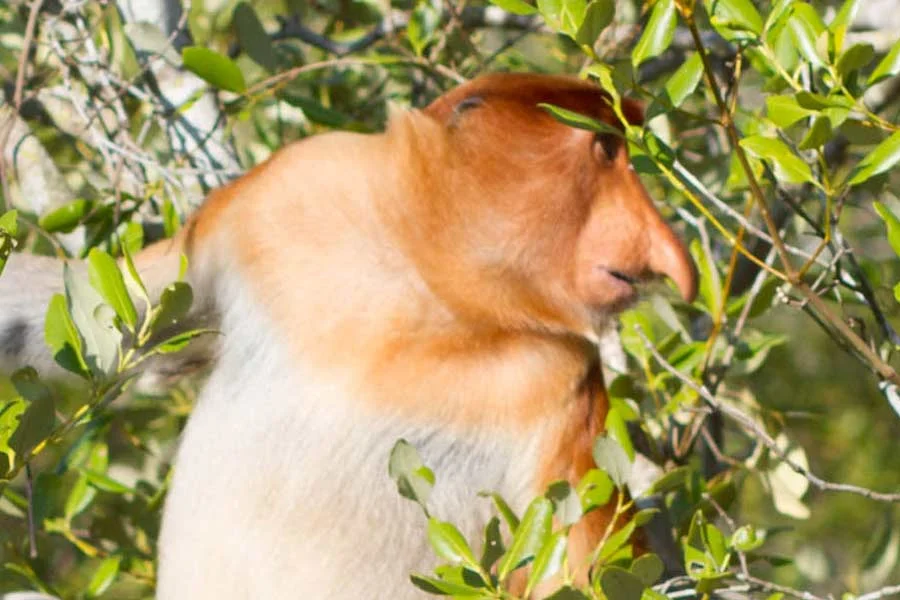
They noticed me. I got so excited, like the feeling of approaching a girl for the first time. Heart racing, "Don't do anything stupid, just be cool." I took a couple snaps, and they were fine. Inched a bit closer. Fine. And then i did something stupid. I took out my GoPro and turned it on. BEEP BEEP BEEP. They ran away. So sad!
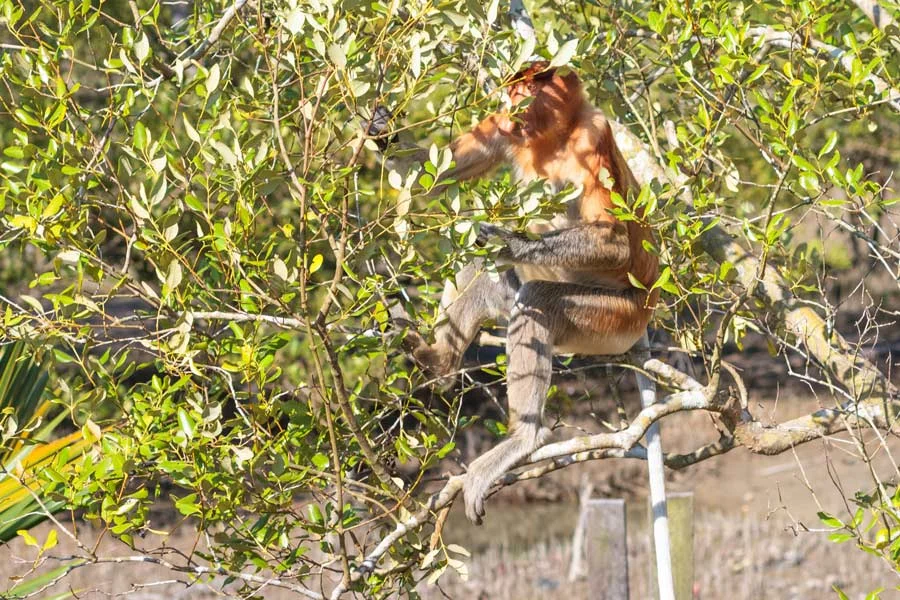
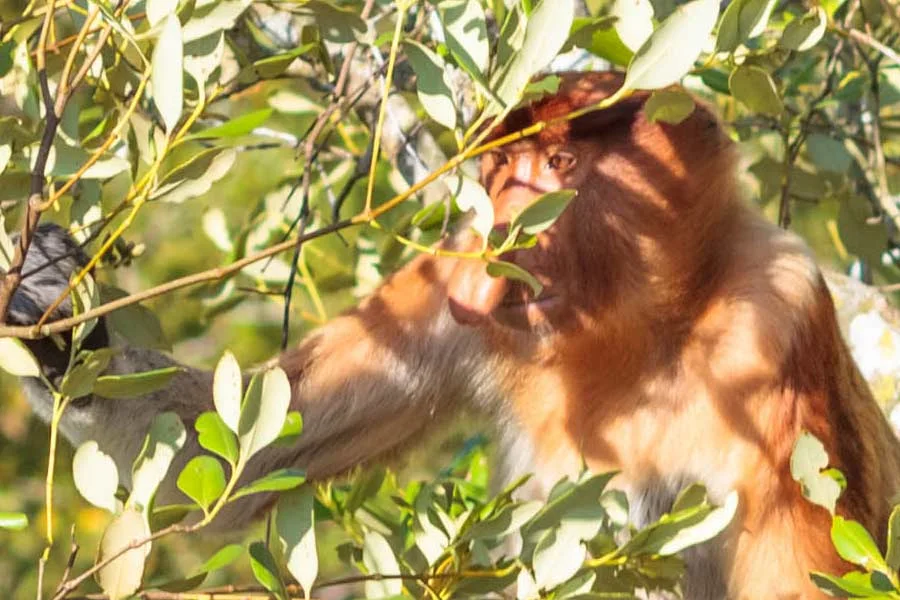
The funny thing is that, in my giddy, kid-like state, I tried to call out after them and ask them why they were running away.
"Hey, wait! Guys, don't go!"
As if they're going to just turn around and listen to reason.
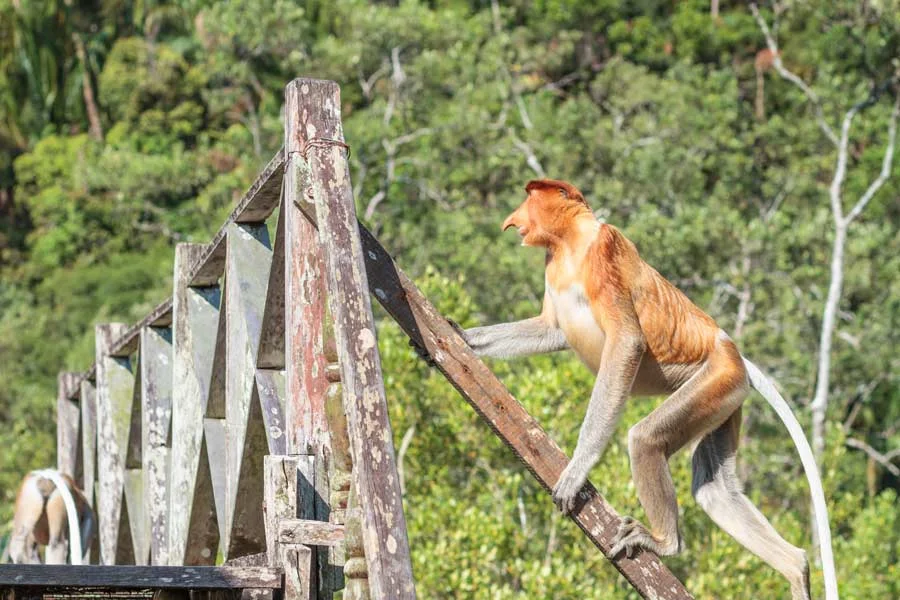
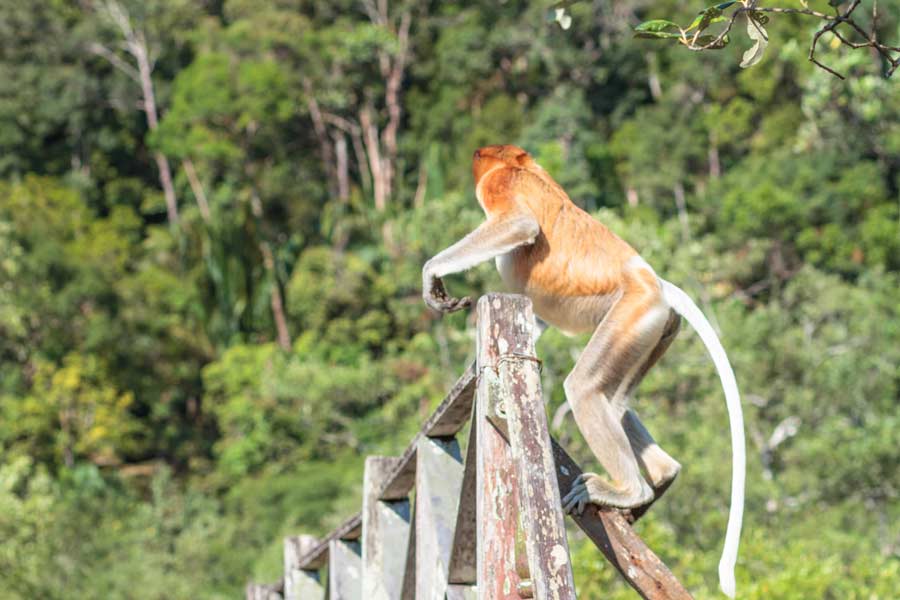
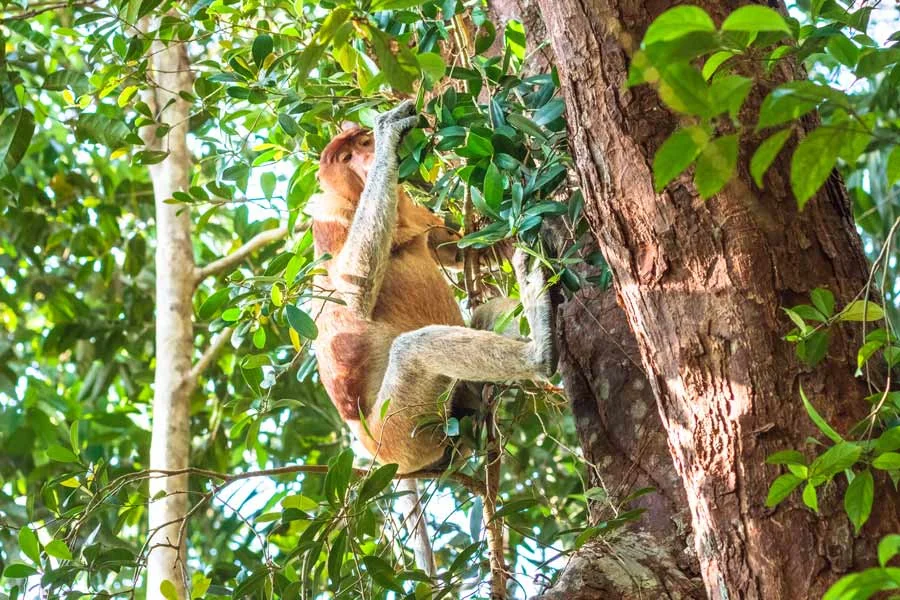
I saw a few more during my stay on Bako but never out in the open like this. And then monsoon season kicked in and they were scarce. Coolest animals I've seen in the wild! Gotta go back to Bako. Here are some shots from them up in the trees.
Caveat --- I'm actually NOT a good photographer. I may have a decent eye, but I make a lot of mistakes that cost me amazing snaps. When you're in the jungle, sweating profusely, and the adrenaline is pumping from seeing wild animals, you don't have a ton of time or mental capacity to figure out the perfect F-stop and ISO settings. That's why these are blurry. And, that's why I have to go back to Bako!

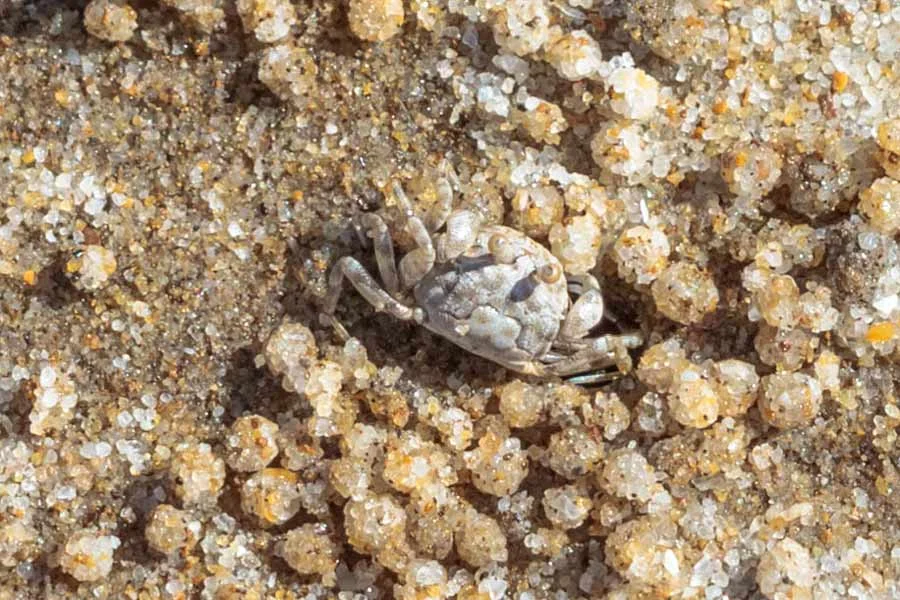
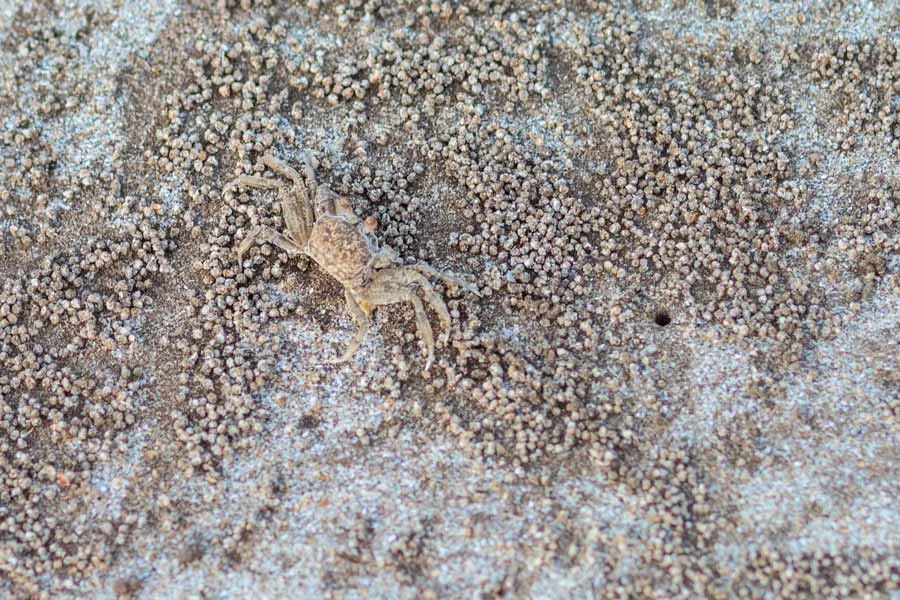
The beach is filled with holes in the sand. If you're patient and you watch closely, you can see crabs running out of the holes every once in a while. They're tiny and have super cute eyes.
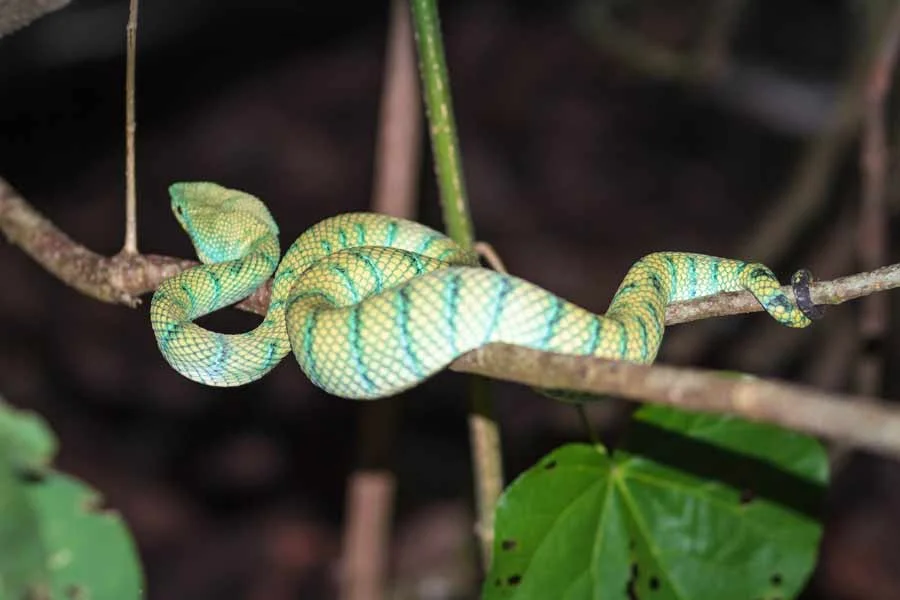
Pit vipers...you would not even notice them if someone didn't tell you they were there. They stay in the same position on the same tree for weeks sometimes. They sit and wait...and wait...and wait for prey to go by and then WHAM! Gotcha!
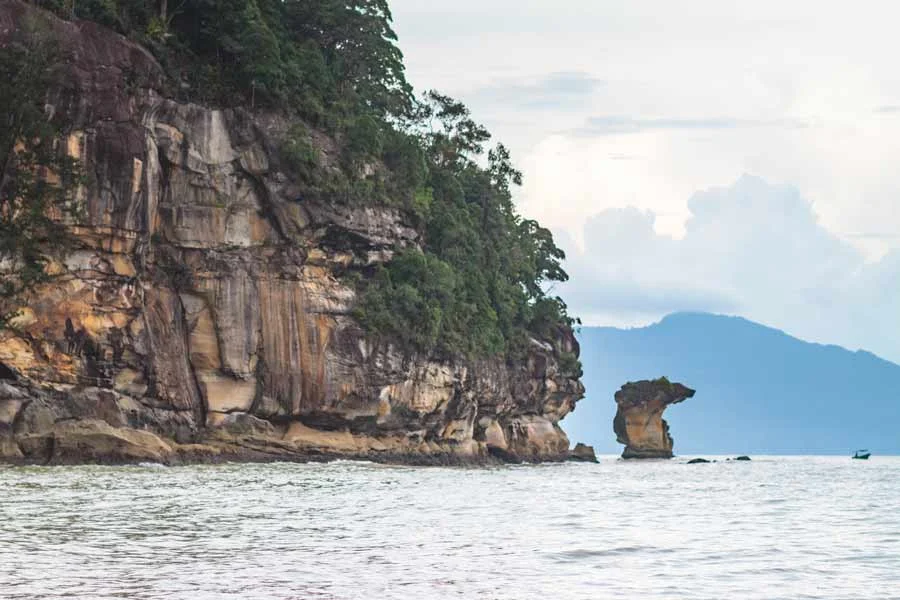
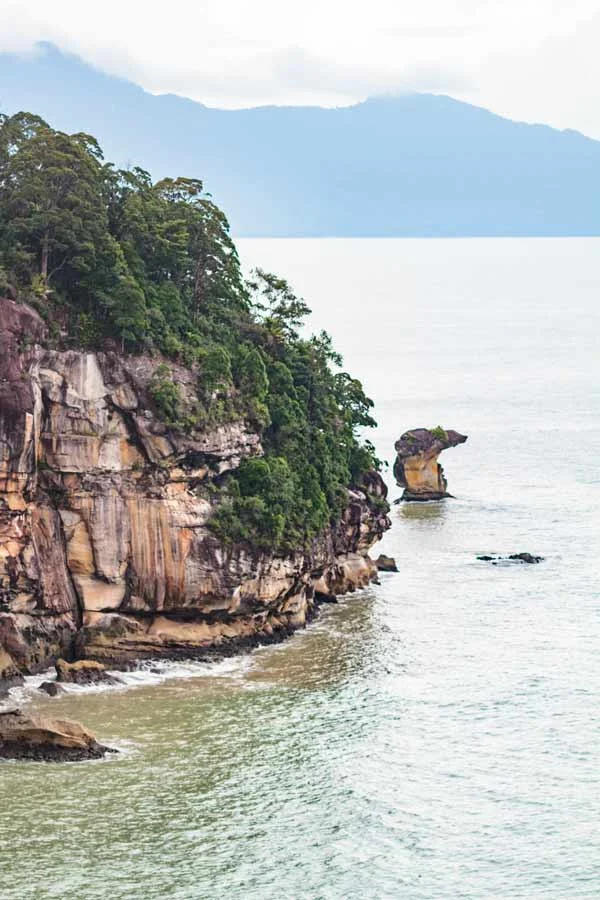
Speaking of snakes, there is a formation that juts out of the water in the park, that resembles a snake. They call this the sea stack...what do you think? Snake like?
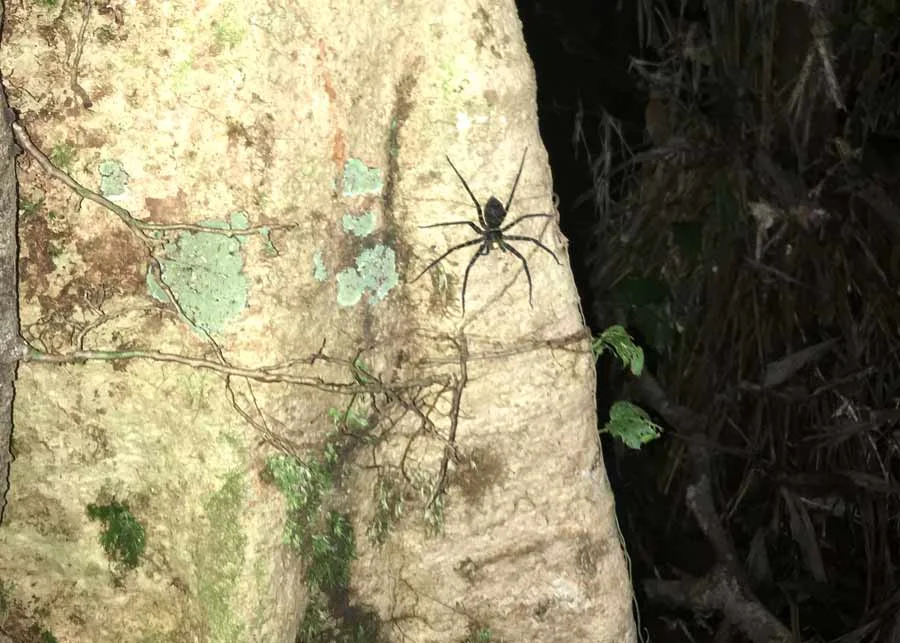
And a spider from the night hike:
Here's a short video of what I assume is a Silver Lutung Monkey:
And, here is a weird video of what I assume are maybe mud skippers in low tide? And then, towards the end of the video, maybe a fish that is about to go aground?
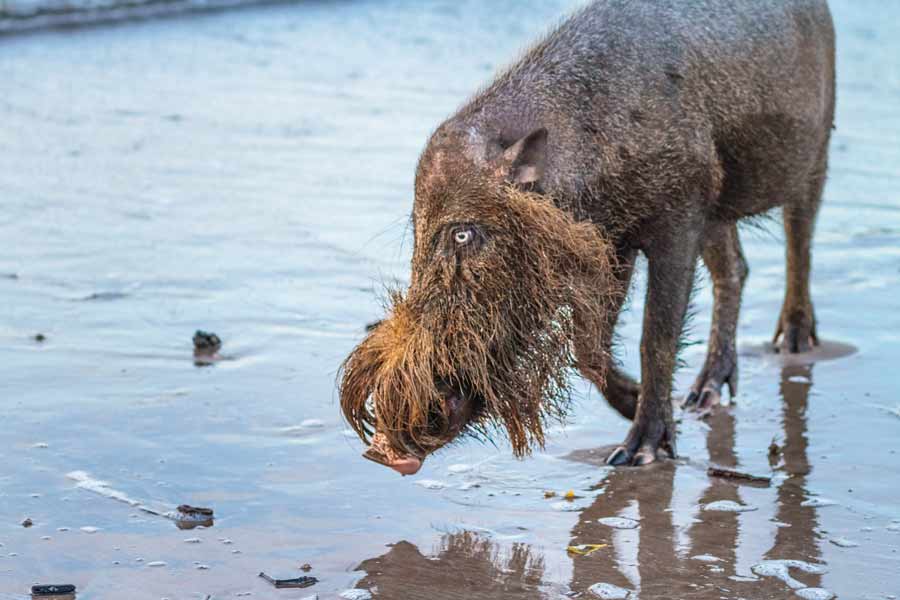
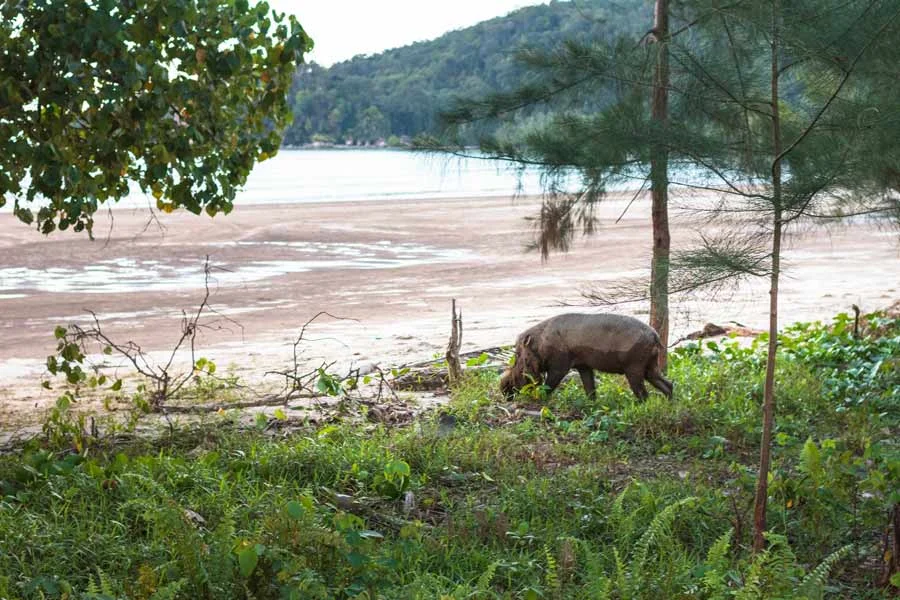
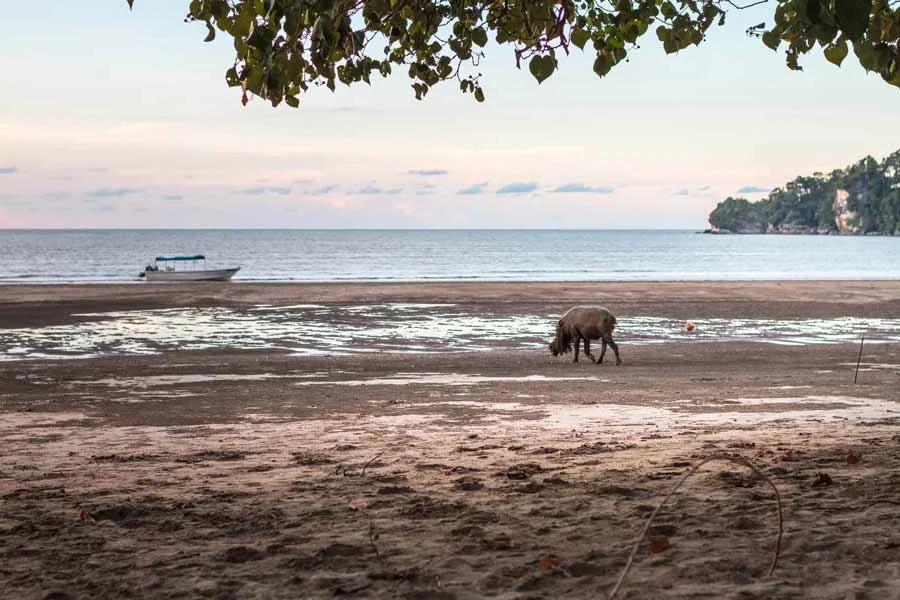
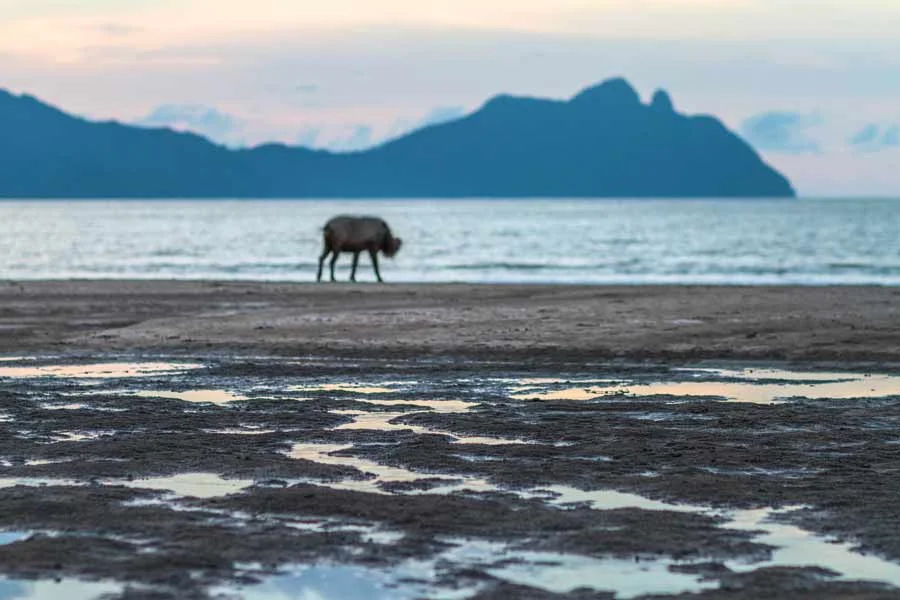
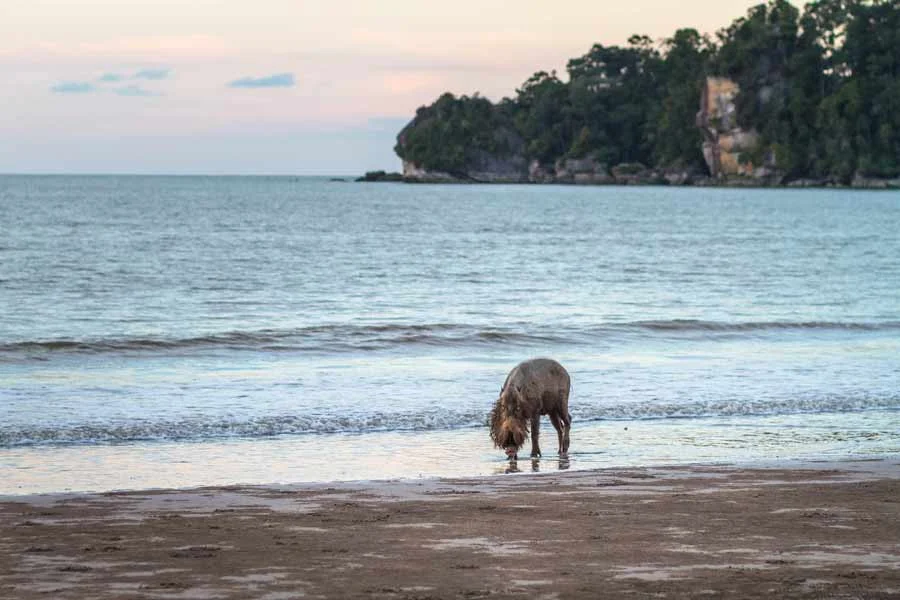
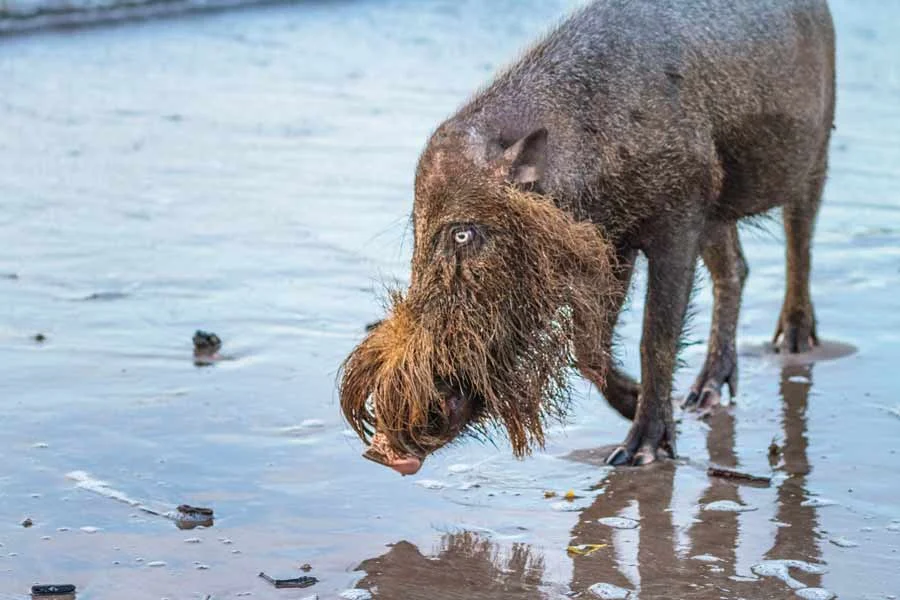
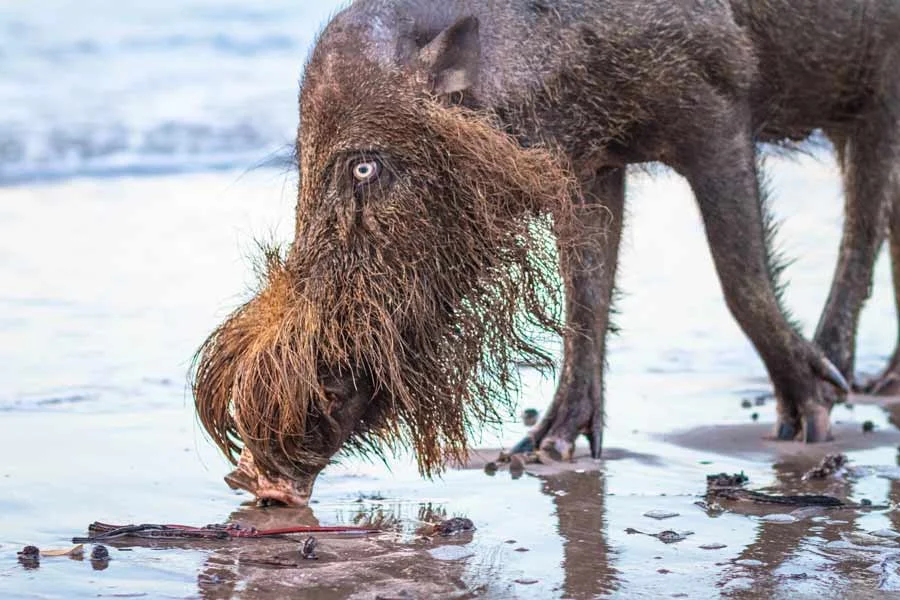
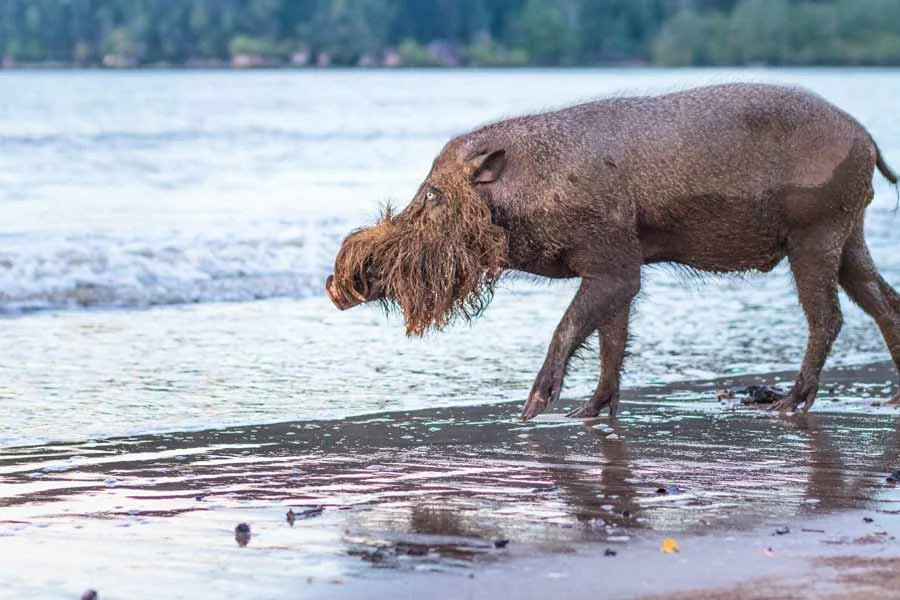
Oh and lastly...a huge shout-out to the bearded pigs!
These guys are shamelessly snorting their way around the island. Stickin' their lil snout in everyone's business. But, it's cool. They're not shy and fantastically weird. One of them just wandered on to the beach at sunset, searchin' for sea worms.
Next up, Part 2: Semenggoh Nature Reserve, wild orangutans!
And, if you are curious about bats...just you wait for Part 3: Mulu National Park. Stay tuned for some mind-blowing battiness...